

Social media can feel like a window, a stage, a crowded room, or even a fast-moving river. These comparisons are metaphors—expressions that describe one thing by saying it is another, without using “like” or “as.” If you have searched for social media metaphors, you may need a creative way to describe online life, explain how platforms work, or make your writing more interesting.
People use these expressions in essays, speeches, blog posts, classroom assignments, advertisements, captions, and everyday conversations. A phrase such as “Social media is a digital town square” can explain a complicated idea in just a few words. But not every metaphor means the same thing. Some show connection, while others highlight pressure, noise, speed, or danger.
This guide, updated for 2026, explains more than 60 social media metaphors in simple English. You will learn what each one means, how to use it naturally, when to avoid it, and which alternatives fit different situations. You will also find real-life conversations, writing tips, common mistakes, practice questions, and ready-to-use examples.
Definition & Meaning
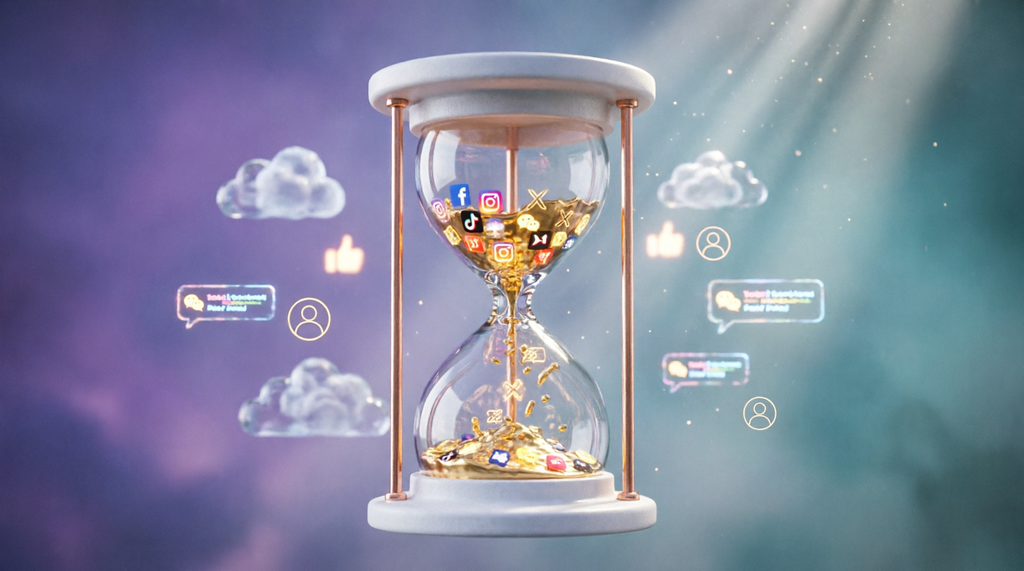
Social media metaphors are creative comparisons that describe online platforms, digital communication, or social media behavior as something familiar, such as a stage, marketplace, mirror, river, or web. They help readers understand an abstract idea by connecting it to a clear image.
What Is a Social Media Metaphor?
A social media metaphor compares social media to another thing to explain an idea, feeling, or experience.
For example:
Social media is a crowded marketplace.
Social media is not literally a marketplace. The metaphor suggests that people gather there, share ideas, promote products, exchange opinions, and compete for attention.
Another example is:
Her Instagram feed is a window into her life.
This means her feed gives others a view of her experiences, interests, or daily activities.
A metaphor usually does not use “like” or “as.” That is one way it differs from a simile.
| Expression | Type | Meaning |
|---|---|---|
| Social media is a stage. | Metaphor | People present themselves to an audience. |
| Social media is like a stage. | Simile | It compares social media to a stage using “like.” |
| Social media is a digital town square. | Metaphor | People gather to share news and opinions. |
| Her posts are windows into her world. | Metaphor | Her posts reveal parts of her life. |
| The algorithm is a gatekeeper. | Metaphor | The algorithm controls what people see. |
Quick Explanation
Social media metaphors make invisible digital experiences easier to picture. They can describe:
- Connection: bridges, webs, meeting places
- Attention: stages, spotlights, magnets
- Information: rivers, streams, libraries
- Identity: mirrors, windows, masks
- Pressure: races, cages, treadmills
- Conflict: battlefields, storms, fires
- Influence: megaphones, seeds, ripples
Quick Tip: Choose a metaphor based on the exact idea you want to express. A “bridge” suggests connection, while a “battlefield” suggests conflict. Using the wrong image can confuse your reader.
Why We Use Social Media Metaphors

People use social media metaphors to explain digital behavior, express emotions, make writing memorable, and describe online spaces in familiar terms. They are useful in conversation, school assignments, creative writing, advertising, journalism, and professional communication because they turn complex online experiences into clear mental pictures.
1. To Explain an Abstract Idea
Social media involves invisible systems, such as algorithms, engagement, reach, and online identity. A metaphor makes these ideas easier to understand.
The algorithm is a gatekeeper.
The reader immediately understands that something controls access to information.
2. To Make Writing More Interesting
A plain sentence may be accurate but forgettable:
Social media spreads information quickly.
A metaphor creates a stronger image:
Social media is a river carrying news from one person to another.
The second sentence gives the reader something to picture.
3. To Describe Everyday Experiences
People often use metaphors without thinking about them.
- “My feed is a rabbit hole.”
- “That post opened a floodgate.”
- “The comments became a battlefield.”
- “She has built a bridge with her audience.”
These expressions sound natural because they connect digital life to familiar experiences.
4. To Express Feelings
Social media can create excitement, loneliness, pressure, or connection. Metaphors help people express these feelings.
The notification bell is a tiny tug on my attention.
This describes how notifications repeatedly pull someone away from other tasks.
5. To Improve School Assignments
Students may use metaphors in essays about:
- The effects of social media
- Digital communication
- Online identity
- Technology and society
- Cyberbullying
- The influence of influencers
- The spread of information
A good metaphor can support an argument, but it should not replace evidence.
6. To Make Speeches and Presentations Memorable
A speaker might say:
Social media is a microphone in every pocket.
This quickly communicates how ordinary people can reach large audiences.
7. To Support Marketing and Branding
Businesses use metaphors to describe community, growth, trust, and customer relationships.
Our online community is a garden, and every conversation helps it grow.
This sounds warmer than simply saying, “We want to increase engagement.”
8. To Add Personality to Captions and Posts
A metaphor can make a short caption feel more expressive.
A little sunshine in my digital corner.
The phrase suggests a positive, welcoming online space.
Pro Tip: In professional communication, use metaphors that clarify your message. Avoid expressions so dramatic that readers forget the actual point.
60+ Social Media Metaphors and Their Meanings
The best social media metaphors describe familiar online experiences through clear images. The examples below cover connection, identity, attention, information, influence, conflict, pressure, and creativity. Each metaphor includes a meaning, a natural sentence, practical usage advice, and alternatives so you can choose the right expression for your purpose.
1. Social Media Is a Digital Town Square
Meaning: A public place where people gather, exchange ideas, and discuss events.
Real explanation: A town square is a shared public space. Social media can serve a similar purpose by bringing people together for conversations, announcements, debates, and community news.
Sample sentence: “Social media has become a digital town square where local residents share updates.”
When to use it: Community discussions, public conversations, civic topics, and essays about online communication.
When NOT to use it: When describing a private message or a small, closed group.
Alternatives: Public meeting place; online community center; virtual gathering place.
Difficulty: Easy
Tone: Neutral
2. Social Media Is a Global Village
Meaning: People from distant places can communicate as if they live in the same small community.
Real explanation: A village suggests closeness and familiarity. Social media reduces distance by allowing people across countries and cultures to share experiences instantly.
Sample sentence: “Social media has turned the internet into a global village.”
When to use it: Essays about globalization, international friendships, and cultural exchange.
When NOT to use it: When discussing serious differences or distance that the metaphor might hide.
Alternatives: Connected world; worldwide neighborhood; borderless community.
Difficulty: Easy
Tone: Neutral
3. Social Media Is a Bridge
Meaning: Social media connects people who might otherwise remain separated.
Real explanation: A bridge links two places. In the same way, social media can connect families, classmates, customers, creators, and communities.
Sample sentence: “For families living in different countries, social media is a bridge across thousands of miles.”
When to use it: Connection, relationships, networking, and communication.
When NOT to use it: When the platform is causing division rather than connection.
Alternatives: Link; connection; pathway between people.
Difficulty: Easy
Tone: Neutral
4. Social Media Is a Web
Meaning: Social media is a network of people and relationships connected in many directions.
Real explanation: A spider’s web has many connected strands. Social networks also contain links between friends, followers, groups, and communities.
Sample sentence: “One message can travel through the web of social media in minutes.”
When to use it: Networks, relationships, information sharing, and digital connections.
When NOT to use it: When you want a warm or welcoming image, because “web” can sometimes suggest complexity or entanglement.
Alternatives: Network; connected system; digital network.
Difficulty: Easy
Tone: Neutral
5. Social Media Is a Window
Meaning: Social media gives people a view into someone else’s life, ideas, or experiences.
Real explanation: A window lets you see another place without entering it. Posts, photos, videos, and stories can offer a glimpse into a person’s world.
Sample sentence: “Her travel photos are a window into places I have never visited.”
When to use it: Personal stories, travel, culture, and online identity.
When NOT to use it: When the content is heavily edited or misleading and you need to stress that it is not a complete picture.
Alternatives: View; glimpse; opening into another world.
Difficulty: Easy
Tone: Neutral
6. Social Media Is a Mirror
Meaning: Social media reflects people’s interests, values, emotions, or behavior.
Real explanation: A mirror shows a reflection. A social media feed may reflect what a person cares about, how they want to be seen, or what they choose to share.
Sample sentence: “A person’s social media feed can become a mirror of their interests.”
When to use it: Identity, self-expression, personal branding, and social behavior.
When NOT to use it: When you want to claim that an online profile shows someone’s entire personality.
Alternatives: Reflection; portrait; digital reflection.
Difficulty: Easy
Tone: Neutral
7. Social Media Is a Stage
Meaning: People perform, present themselves, and communicate before an audience.
Real explanation: On a stage, performers choose what to show and how to act. Social media users often make similar choices when posting photos, videos, opinions, or achievements.
Sample sentence: “For many creators, social media is a stage where they share their talents.”
When to use it: Self-presentation, performance, influencers, and public image.
When NOT to use it: When discussing private conversations or unplanned communication.
Alternatives: Spotlight; public platform; performance space.
Difficulty: Easy
Tone: Neutral
8. Social Media Is a Spotlight
Meaning: Social media directs attention toward certain people, posts, or issues.
Real explanation: A spotlight makes one person or object stand out. A viral post or trending topic can receive a similar burst of attention.
Sample sentence: “The viral video put a spotlight on the small business.”
When to use it: Visibility, fame, trends, and public attention.
When NOT to use it: When describing content that receives little attention.
Alternatives: Center of attention; public focus; beam of attention.
Difficulty: Easy
Tone: Neutral
9. Social Media Is a Megaphone
Meaning: Social media gives people a way to amplify their voices.
Real explanation: A megaphone makes a voice louder. Social media can help an individual, organization, or movement reach a much larger audience.
Sample sentence: “For small charities, social media can be a megaphone for important causes.”
When to use it: Advocacy, marketing, public awareness, and influence.
When NOT to use it: When the message is private or intended for only one person.
Alternatives: Amplifier; loudspeaker; platform for voices.
Difficulty: Easy
Tone: Neutral
10. Social Media Is a Microphone in Every Pocket
Meaning: Almost anyone with a phone can speak to an audience.
Real explanation: A microphone allows someone to broadcast a message. This metaphor emphasizes how social media gives ordinary people the power to publish ideas.
Sample sentence: “A smartphone has become a microphone in every pocket.”
When to use it: Speeches, essays, journalism, citizen reporting, and digital empowerment.
When NOT to use it: When you need a very formal or technical description.
Alternatives: Personal broadcasting tool; voice amplifier; public communication device.
Difficulty: Easy
Tone: Neutral
11. Social Media Is a Marketplace
Meaning: People exchange ideas, products, services, attention, and opinions.
Real explanation: A marketplace is a place where people buy, sell, compare, and promote things. Social media also brings creators, customers, businesses, and audiences together.
Sample sentence: “Instagram has become a marketplace of ideas, products, and personal brands.”
When to use it: Marketing, commerce, advertising, and public discussion.
When NOT to use it: When you want to focus only on friendship or emotional support.
Alternatives: Digital marketplace; online bazaar; exchange of ideas.
Difficulty: Easy
Tone: Neutral
12. Social Media Is a Library
Meaning: Social media stores and shares a large amount of information.
Real explanation: A library contains books and knowledge. Social platforms can also hold tutorials, news, historical posts, educational videos, and personal experiences.
Sample sentence: “With the right search habits, social media can become a library of practical knowledge.”
When to use it: Education, research, learning, and information sharing.
When NOT to use it: When the information is unreliable and you need to emphasize misinformation.
Alternatives: Information bank; knowledge hub; digital archive.
Difficulty: Easy
Tone: Neutral
13. Social Media Is a River
Meaning: Information flows continuously through social media.
Real explanation: A river keeps moving. Social media feeds also carry a constant stream of posts, videos, comments, and updates.
Sample sentence: “News moves through social media like a river that never stops.”
When to use it: Information flow, constant updates, and fast-moving trends.
When NOT to use it: When discussing one fixed post or a permanent record.
Alternatives: Stream; current; flow of information.
Difficulty: Easy
Tone: Neutral
14. Social Media Is an Information Stream
Meaning: Social media delivers a continuous flow of content.
Real explanation: A stream moves steadily from one place to another. This metaphor focuses on the ongoing arrival of posts and updates.
Sample sentence: “My morning information stream includes news, messages, and industry updates.”
When to use it: News, feeds, updates, and content consumption.
When NOT to use it: When the content is not continuous or when the platform is being discussed as a physical place.
Alternatives: Content flow; news stream; digital current.
Difficulty: Easy
Tone: Neutral
15. Social Media Is a Firehose
Meaning: Social media can deliver an overwhelming amount of information at once.
Real explanation: A firehose releases a powerful, continuous stream of water. The metaphor highlights the speed and volume of online content.
Sample sentence: “Trying to read every update can feel like drinking from a social media firehose.”
When to use it: Information overload, constant notifications, and overwhelming feeds.
When NOT to use it: When describing a calm, carefully selected feed.
Alternatives: Flood of information; overwhelming stream; torrent of content.
Difficulty: Medium
Tone: Informal
16. Social Media Is a Flood
Meaning: Information, opinions, or reactions can arrive in overwhelming quantities.
Real explanation: A flood covers an area with water. On social media, a sudden event can produce thousands of posts, comments, and reactions.
Sample sentence: “After the announcement, a flood of comments filled the platform.”
When to use it: Viral events, breaking news, and overwhelming reactions.
When NOT to use it: When the amount of content is small or manageable.
Alternatives: Wave; surge; deluge of information.
Difficulty: Easy
Tone: Neutral
17. Social Media Is a Wave
Meaning: Trends and public reactions rise, spread, and eventually lose strength.
Real explanation: A wave grows, travels, and breaks. Social media trends often follow a similar pattern.
Sample sentence: “The small brand rode a wave of interest after its video went viral.”
When to use it: Trends, popularity, viral content, and public enthusiasm.
When NOT to use it: When discussing a stable, long-term audience.
Alternatives: Surge; trend; rising movement.
Difficulty: Easy
Tone: Neutral
18. Social Media Is a Tidal Wave
Meaning: A powerful surge of attention or information can affect many people at once.
Real explanation: A tidal wave suggests great force and scale. It is stronger than an ordinary wave and works well for major viral events.
Sample sentence: “The campaign created a tidal wave of support online.”
When to use it: Large movements, major trends, and overwhelming public reactions.
When NOT to use it: For small updates or ordinary engagement.
Alternatives: Massive surge; huge wave; overwhelming movement.
Difficulty: Medium
Tone: Neutral
19. Social Media Is a Current
Meaning: Social media carries people, ideas, and trends in a particular direction.
Real explanation: A current moves water. In online spaces, public opinion and popular content can pull users toward certain topics.
Sample sentence: “It is easy to get carried away by the current of online opinion.”
When to use it: Trends, group influence, and changing public opinion.
When NOT to use it: When you want to stress individual control.
Alternatives: Flow; movement; prevailing trend.
Difficulty: Medium
Tone: Neutral
20. Social Media Is a Rabbit Hole
Meaning: One piece of content can lead to hours of unexpected browsing.
Real explanation: The expression comes from the idea of falling into a deep, winding passage. Online, one video or link can lead to many more.
Sample sentence: “I opened one video and fell into a social media rabbit hole.”
When to use it: Casual conversation, humor, and discussions about endless browsing.
When NOT to use it: In a formal report unless the tone allows informal language.
Alternatives: Endless scroll; content maze; browsing spiral.
Difficulty: Easy
Tone: Informal
21. Social Media Is a Maze
Meaning: Social media can be confusing, complicated, or difficult to navigate.
Real explanation: A maze has many paths and can make it hard to find the way out. Social media may contain complicated settings, endless content, and unclear information.
Sample sentence: “Finding reliable information in a maze of online posts takes patience.”
When to use it: Confusion, information overload, and difficult navigation.
When NOT to use it: When describing a simple, well-organized platform.
Alternatives: Labyrinth; tangled network; confusing landscape.
Difficulty: Easy
Tone: Neutral
22. Social Media Is a Garden
Meaning: Online relationships and communities need care to grow.
Real explanation: A garden needs time, attention, and regular care. A healthy online community also grows through thoughtful posts, genuine conversations, and consistent effort.
Sample sentence: “Building a loyal audience is like tending a garden.”
When to use it: Community building, long-term growth, and relationship-based marketing.
When NOT to use it: When describing a sudden viral moment.
Alternatives: Growing community; digital garden; place to cultivate relationships.
Difficulty: Easy
Tone: Neutral
23. Social Media Is a Seedbed
Meaning: Social media is a place where ideas, movements, or relationships can begin and develop.
Real explanation: A seedbed is a place where seeds grow. Online conversations can plant ideas that later become projects, campaigns, or communities.
Sample sentence: “The group’s social page became a seedbed for new community projects.”
When to use it: Innovation, movements, education, and early-stage ideas.
When NOT to use it: When discussing a finished or fully developed project.
Alternatives: Starting point; breeding ground; place for ideas to grow.
Difficulty: Medium
Tone: Neutral
24. Social Media Is a Greenhouse
Meaning: Social media can provide a protected environment where ideas or communities grow.
Real explanation: A greenhouse helps plants grow under controlled conditions. A private group or supportive online community can give people a similar space to develop.
Sample sentence: “The private group became a greenhouse for new writers.”
When to use it: Supportive communities, learning groups, and creative development.
When NOT to use it: When describing a public argument or hostile space.
Alternatives: Nurturing space; supportive environment; growth platform.
Difficulty: Medium
Tone: Neutral
25. Social Media Is a Garden of Ideas
Meaning: Social media contains many ideas that can inspire new thoughts.
Real explanation: A garden has many different plants. A social feed may contain opinions, stories, questions, and discoveries that help people think creatively.
Sample sentence: “My feed is a garden of ideas, with something new to learn every day.”
When to use it: Education, creativity, brainstorming, and positive descriptions of content.
When NOT to use it: When you need to emphasize poor-quality or harmful content.
Alternatives: Collection of ideas; creative landscape; field of inspiration.
Difficulty: Easy
Tone: Neutral
26. Social Media Is a Mirror Ball
Meaning: Social media reflects many different parts of society and identity.
Real explanation: A mirror ball reflects light in many directions. Social media can reflect different cultures, opinions, lifestyles, and communities.
Sample sentence: “Social media is a mirror ball, reflecting many sides of modern life.”
When to use it: Creative writing, cultural discussions, and descriptions of diversity.
When NOT to use it: In a formal explanation where a simpler metaphor would be clearer.
Alternatives: Reflection of society; cultural mosaic; many-sided mirror.
Difficulty: Medium
Tone: Creative
27. Social Media Is a Mask
Meaning: People may hide parts of themselves or present a carefully chosen identity online.
Real explanation: A mask covers a face. On social media, people sometimes hide their struggles or show only the image they want others to see.
Sample sentence: “A polished profile can become a mask that hides personal struggles.”
When to use it: Online identity, privacy, image management, and emotional honesty.
When NOT to use it: When describing authentic sharing.
Alternatives: Disguise; public persona; carefully chosen image.
Difficulty: Easy
Tone: Neutral
28. Social Media Is a Costume
Meaning: People may adopt a particular image or personality online.
Real explanation: A costume changes how someone appears. Social media users sometimes choose clothes, words, photos, and opinions to create a specific impression.
Sample sentence: “His confident online persona felt like a costume he wore for an audience.”
When to use it: Identity, performance, and social expectations.
When NOT to use it: When discussing honest self-expression.
Alternatives: Persona; public image; role.
Difficulty: Medium
Tone: Neutral
29. Social Media Is a Digital Diary
Meaning: Social media can record memories, experiences, thoughts, and milestones.
Real explanation: A diary stores personal reflections. Posts, photos, and videos can create a record of someone’s life over time.
Sample sentence: “Her old posts became a digital diary of her college years.”
When to use it: Memories, personal storytelling, and reflection.
When NOT to use it: When discussing content created only for advertising or public promotion.
Alternatives: Online journal; memory book; personal archive.
Difficulty: Easy
Tone: Neutral
30. Social Media Is a Time Capsule
Meaning: Old posts preserve moments, opinions, and experiences from the past.
Real explanation: A time capsule stores objects for future discovery. Social media posts can preserve snapshots of earlier stages of life.
Sample sentence: “My old photos are a time capsule of my school days.”
When to use it: Memories, nostalgia, history, and personal growth.
When NOT to use it: When discussing content that disappears quickly.
Alternatives: Digital archive; preserved memory; snapshot of the past.
Difficulty: Easy
Tone: Neutral
31. Social Media Is a Digital Footprint
Meaning: A person’s online activity leaves a lasting record.
Real explanation: A footprint shows where someone has walked. Online searches, posts, comments, and interactions can leave traces that others may find later.
Sample sentence: “Every public post adds another mark to your digital footprint.”
When to use it: Privacy, online reputation, cybersecurity, and digital citizenship.
When NOT to use it: When discussing a single private conversation that leaves no lasting record.
Alternatives: Online trail; digital record; internet footprint.
Difficulty: Easy
Tone: Neutral
32. Social Media Is a Fingerprint
Meaning: A person’s online activity can create a unique identity or pattern.
Real explanation: A fingerprint is unique to each person. A collection of posts, interests, and interactions can create a recognizable digital identity.
Sample sentence: “Your online habits form a digital fingerprint that can reveal your interests.”
When to use it: Personal identity, privacy, data, and online behavior.
When NOT to use it: When discussing a general group rather than an individual.
Alternatives: Digital signature; online identity; personal data pattern.
Difficulty: Medium
Tone: Neutral
33. Social Media Is a Magnet
Meaning: Social media can attract attention, people, and activity.
Real explanation: A magnet pulls objects toward it. Engaging content, popular creators, or trending topics can attract large audiences.
Sample sentence: “The creator’s honest storytelling became a magnet for new followers.”
When to use it: Attraction, popularity, engagement, and audience growth.
When NOT to use it: When describing content that receives no attention.
Alternatives: Attraction point; audience pull; attention magnet.
Difficulty: Easy
Tone: Neutral
34. Social Media Is a Spotlight on Your Brand
Meaning: Social media makes a business or person more visible.
Real explanation: A spotlight draws attention to a subject. A strong online presence can help people notice a brand’s work, values, or products.
Sample sentence: “Her social media presence puts a spotlight on her handmade business.”
When to use it: Marketing, personal branding, and visibility.
When NOT to use it: When discussing private communication.
Alternatives: Showcase; public platform; visibility tool.
Difficulty: Easy
Tone: Neutral
35. Social Media Is a Stage With Millions of Seats
Meaning: Social media can provide access to a very large audience.
Real explanation: A stage is where someone performs, while seats represent the audience. The metaphor emphasizes how many people may watch or respond to a post.
Sample sentence: “One short video can turn a small stage into a room with millions of seats.”
When to use it: Viral content, creators, marketing, and public communication.
When NOT to use it: When the audience is small or private.
Alternatives: Global stage; massive audience; worldwide platform.
Difficulty: Medium
Tone: Creative
36. Social Media Is a Launchpad
Meaning: Social media can help ideas, products, careers, or campaigns begin and reach an audience.
Real explanation: A launchpad sends something into the air. Social media can give a new project the initial attention it needs to move forward.
Sample sentence: “The platform became a launchpad for her photography career.”
When to use it: New businesses, creators, campaigns, and opportunities.
When NOT to use it: When discussing a project that is already well established.
Alternatives: Starting platform; springboard; stepping stone.
Difficulty: Easy
Tone: Neutral
37. Social Media Is a Springboard
Meaning: Social media helps someone move toward a larger opportunity.
Real explanation: A springboard helps a diver jump higher. In the same way, social media can help people gain visibility, connections, or experience.
Sample sentence: “Her first viral post became a springboard for a writing career.”
When to use it: Career growth, promotion, and new opportunities.
When NOT to use it: When the platform is the final destination rather than a starting point.
Alternatives: Launchpad; stepping stone; starting point.
Difficulty: Easy
Tone: Neutral
38. Social Media Is a Doorway
Meaning: Social media gives people access to new opportunities, people, or information.
Real explanation: A doorway leads into another space. A social platform can open access to communities, jobs, knowledge, and experiences.
Sample sentence: “For many students, LinkedIn is a doorway to professional opportunities.”
When to use it: Networking, education, jobs, and discovery.
When NOT to use it: When the platform is preventing access rather than creating it.
Alternatives: Gateway; entrance; opening.
Difficulty: Easy
Tone: Neutral
39. Social Media Is a Key
Meaning: Social media can unlock opportunities or access to people and information.
Real explanation: A key opens a locked door. A useful connection or well-timed post can create opportunities that were previously difficult to reach.
Sample sentence: “A thoughtful introduction on social media became the key to a valuable partnership.”
When to use it: Networking, career growth, and opportunity.
When NOT to use it: When access depends on many factors rather than one action.
Alternatives: Gateway; access point; opportunity opener.
Difficulty: Easy
Tone: Neutral
40. Social Media Is a Compass
Meaning: Social media can help people discover interests, communities, or directions.
Real explanation: A compass helps travelers find their way. Social media can guide users toward useful information, creators, groups, and new ideas.
Sample sentence: “Her online community became a compass during her career change.”
When to use it: Guidance, discovery, learning, and support.
When NOT to use it: When the information is unreliable or misleading.
Alternatives: Guide; map; direction finder.
Difficulty: Easy
Tone: Neutral
41. Social Media Is a Map
Meaning: Social media helps people explore communities, interests, and opportunities.
Real explanation: A map shows routes and places. Online networks can help people find groups, creators, events, and useful resources.
Sample sentence: “A well-organized profile can act as a map of your professional interests.”
When to use it: Networking, exploration, personal branding, and discovery.
When NOT to use it: When describing emotional pressure or conflict.
Alternatives: Guide; network map; roadmap.
Difficulty: Easy
Tone: Neutral
42. Social Media Is a Thread
Meaning: A conversation or idea can connect several people and messages.
Real explanation: A thread is a strand that links parts together. Online, a discussion thread can connect comments, questions, and responses.
Sample sentence: “One thoughtful comment started a thread of helpful advice.”
When to use it: Conversations, online discussions, and connected ideas.
When NOT to use it: When describing the entire social media platform.
Alternatives: Conversation chain; discussion line; connected exchange.
Difficulty: Easy
Tone: Neutral
43. Social Media Is a Conversation Across the World
Meaning: People in different places can communicate with one another in real time.
Real explanation: A conversation usually happens between people who share a space or connection. Social media expands that conversation across borders and time zones.
Sample sentence: “A comment section can become a conversation across the world.”
When to use it: International communication, cultural exchange, and online communities.
When NOT to use it: When discussing one-way advertising with no interaction.
Alternatives: Global dialogue; worldwide discussion; international exchange.
Difficulty: Easy
Tone: Neutral
44. Social Media Is a Dinner Table
Meaning: Social media can be a place where people exchange stories, opinions, and experiences.
Real explanation: A dinner table brings people together for conversation. A social platform can create a similar sense of shared discussion, even when users are far apart.
Sample sentence: “Our group chat feels like a dinner table where everyone brings a story.”
When to use it: Friendly groups, family communication, and community.
When NOT to use it: When describing a hostile or highly competitive space.
Alternatives: Gathering place; shared table; conversation circle.
Difficulty: Easy
Tone: Neutral
45. Social Media Is a Campfire
Meaning: Social media can bring people together around shared stories, interests, or experiences.
Real explanation: A campfire creates a warm place for people to gather and talk. An online community can offer a similar feeling of belonging.
Sample sentence: “The fan group became a digital campfire where people shared memories.”
When to use it: Communities, fandoms, friendships, and shared interests.
When NOT to use it: When discussing cold, distant, or hostile interactions.
Alternatives: Gathering place; community hearth; shared space.
Difficulty: Medium
Tone: Creative
46. Social Media Is a Digital Neighborhood
Meaning: Social media brings people together in shared online spaces.
Real explanation: A neighborhood contains homes, relationships, local news, and community interactions. Social media groups can create similar connections around interests or locations.
Sample sentence: “The neighborhood group became a digital neighborhood for sharing local updates.”
When to use it: Local communities, online groups, and shared interests.
When NOT to use it: When describing a platform with no sense of community.
Alternatives: Online community; virtual neighborhood; digital gathering place.
Difficulty: Easy
Tone: Neutral
47. Social Media Is a Mirror of Society
Meaning: Social media reflects the ideas, habits, conflicts, and values found in society.
Real explanation: A mirror shows a reflection. Social media can reveal public concerns, cultural trends, social divisions, and changing attitudes.
Sample sentence: “Social media is a mirror of society, showing both its kindness and its conflicts.”
When to use it: Essays, sociology, culture, and social commentary.
When NOT to use it: When claiming that social media perfectly represents everyone.
Alternatives: Reflection of culture; social snapshot; portrait of society.
Difficulty: Easy
Tone: Neutral
48. Social Media Is a Pressure Cooker
Meaning: Social media can build emotional pressure until people react strongly.
Real explanation: A pressure cooker holds heat and pressure. Online arguments, constant comparison, and public criticism can create a similar buildup.
Sample sentence: “The comment section became a pressure cooker after the controversial announcement.”
When to use it: Conflict, stress, public criticism, and emotional tension.
When NOT to use it: When describing a calm, supportive discussion.
Alternatives: Tense environment; emotional pressure chamber; boiling point.
Difficulty: Medium
Tone: Neutral
49. Social Media Is a Battlefield
Meaning: Social media can become a place of conflict, competition, or opposing opinions.
Real explanation: A battlefield is a place where opposing sides fight. Online arguments, political disputes, and brand competition can sometimes feel similar.
Sample sentence: “The comment section turned into a battlefield over the new policy.”
When to use it: Conflict, heated debates, and competition.
When NOT to use it: When describing ordinary friendly discussion.
Alternatives: Arena; battleground; conflict zone.
Difficulty: Easy
Tone: Neutral
50. Social Media Is a War of Attention
Meaning: People and brands compete to attract limited attention.
Real explanation: A war suggests intense competition. Online, many posts compete for the same few seconds of a user’s attention.
Sample sentence: “Every creator is part of a war of attention, competing with thousands of other posts.”
When to use it: Marketing, content strategy, and competition.
When NOT to use it: When you want a softer, less aggressive description.
Alternatives: Attention race; competition for visibility; fight for attention.
Difficulty: Medium
Tone: Neutral
51. Social Media Is a Treadmill
Meaning: Social media can create a cycle of constant posting, checking, and trying to keep up.
Real explanation: A treadmill keeps moving while a person stays in one place. Users may feel they work continuously without reaching a satisfying stopping point.
Sample sentence: “Trying to post every day can feel like running on a social media treadmill.”
When to use it: Burnout, content pressure, and endless activity.
When NOT to use it: When discussing a relaxed and occasional social media habit.
Alternatives: Endless cycle; hamster wheel; constant routine.
Difficulty: Easy
Tone: Neutral
52. Social Media Is a Hamster Wheel
Meaning: Social media can trap users in repetitive activity without a clear sense of progress.
Real explanation: A hamster wheel keeps an animal running in place. The metaphor suggests endless scrolling, posting, checking metrics, or chasing engagement.
Sample sentence: “Chasing every trend can put creators on a hamster wheel.”
When to use it: Burnout, repetitive habits, and unrealistic growth pressure.
When NOT to use it: When discussing productive, intentional use.
Alternatives: Treadmill; endless cycle; repetitive loop.
Difficulty: Easy
Tone: Informal
53. Social Media Is a Comparison Trap
Meaning: Social media can encourage people to compare their lives with carefully selected images of others.
Real explanation: A trap catches someone. Online comparison can become difficult to escape, especially when people see others’ achievements without seeing their struggles.
Sample sentence: “A constant stream of perfect photos can turn social media into a comparison trap.”
When to use it: Mental well-being discussions, self-image, and social pressure.
When NOT to use it: When describing a positive community that supports people.
Alternatives: Comparison cycle; measuring stick; pressure to compete.
Difficulty: Easy
Tone: Neutral
54. Social Media Is a Highlight Reel
Meaning: Social media often shows selected positive moments rather than the full reality of life.
Real explanation: A highlight reel contains the best moments from a performance. Many users post achievements, celebrations, and attractive images while leaving out ordinary or difficult moments.
Sample sentence: “Remember that a profile is often a highlight reel, not the whole story.”
When to use it: Online identity, comparison, and realistic expectations.
When NOT to use it: When someone shares a complete and honest account of their experience.
Alternatives: Best moments; edited portrait; selected snapshot.
Difficulty: Easy
Tone: Neutral
55. Social Media Is a Filter
Meaning: Social media can change how people see themselves, others, or the world.
Real explanation: A filter changes an image. Online content can also shape perception by selecting, editing, or emphasizing certain information.
Sample sentence: “The algorithm acts as a filter, shaping which stories reach our screens.”
When to use it: Algorithms, edited images, selective information, and perception.
When NOT to use it: When discussing a neutral, complete source of information.
Alternatives: Lens; screen; selective frame.
Difficulty: Easy
Tone: Neutral
56. Social Media Is a Gatekeeper
Meaning: Algorithms, platform rules, or influential accounts can control what people see or access.
Real explanation: A gatekeeper decides who or what passes through a gate. In social media, recommendation systems and moderation policies can shape the content that reaches users.
Sample sentence: “The algorithm acts as a gatekeeper, deciding which posts appear in the feed.”
When to use it: Algorithms, content visibility, moderation, and access.
When NOT to use it: When describing a platform where users have complete control over what they see.
Alternatives: Filter; controller; access manager.
Difficulty: Easy
Tone: Neutral
57. Social Media Is a Loudspeaker in a Storm
Meaning: Social media can amplify voices during confusing or emotionally intense events.
Real explanation: A loudspeaker makes sound stronger, while a storm suggests chaos. Together, the image describes how social media can make information and emotion louder during a crisis.
Sample sentence: “During the crisis, social media became a loudspeaker in a storm of rumors.”
When to use it: Breaking news, crises, misinformation, and public reaction.
When NOT to use it: When describing calm communication.
Alternatives: Amplifier in chaos; voice in confusion; signal in a storm.
Difficulty: Medium
Tone: Creative
58. Social Media Is a Spark
Meaning: A small post or idea can start a larger movement or reaction.
Real explanation: A spark can begin a fire. A short message, image, or video can sometimes inspire discussion, action, or widespread attention.
Sample sentence: “One student’s post became a spark for a campus recycling campaign.”
When to use it: Movements, inspiration, creativity, and viral ideas.
When NOT to use it: When the content has no influence or response.
Alternatives: Starting point; trigger; catalyst.
Difficulty: Easy
Tone: Neutral
59. Social Media Is a Ripple
Meaning: A small online action can affect people far beyond its original audience.
Real explanation: A ripple spreads outward when something touches water. A post may begin with one person but influence many others through shares and conversations.
Sample sentence: “Her kind message created ripples of encouragement across the group.”
When to use it: Influence, kindness, social change, and sharing.
When NOT to use it: When the effect is immediate and massive rather than gradual.
Alternatives: Chain reaction; spreading effect; wave of influence.
Difficulty: Easy
Tone: Neutral
60. Social Media Is a Domino Effect
Meaning: One online action can lead to a series of reactions.
Real explanation: When one domino falls, it knocks down others. On social media, one share may lead to more shares, comments, news coverage, or public discussion.
Sample sentence: “The first repost started a domino effect that brought thousands of people to the campaign.”
When to use it: Viral content, cause and effect, and spreading information.
When NOT to use it: When there is no clear chain of reactions.
Alternatives: Chain reaction; snowball effect; cascading response.
Difficulty: Easy
Tone: Neutral
61. Social Media Is a Snowball
Meaning: A small post or idea can grow larger as more people engage with it.
Real explanation: A snowball grows as it rolls downhill. Online attention can increase through likes, shares, comments, and recommendations.
Sample sentence: “The simple question became a snowball of discussion.”
When to use it: Growing attention, viral posts, and expanding conversations.
When NOT to use it: When the response is shrinking or remains small.
Alternatives: Growing wave; expanding reaction; snowball effect.
Difficulty: Easy
Tone: Neutral
62. Social Media Is a Chain Reaction
Meaning: One online action causes several connected responses.
Real explanation: A chain reaction happens when one event triggers another. Social media posts can lead to replies, reposts, discussions, and further action.
Sample sentence: “The announcement triggered a chain reaction of questions and answers.”
When to use it: Online discussions, viral content, and cause-and-effect explanations.
When NOT to use it: When the content receives no response.
Alternatives: Domino effect; ripple effect; cascading response.
Difficulty: Easy
Tone: Neutral
63. Social Media Is a Digital Echo
Meaning: Social media repeats and amplifies ideas, opinions, or messages.
Real explanation: An echo repeats a sound. Online, a message may be repeated by many accounts until it becomes widely known.
Sample sentence: “The rumor grew louder in the digital echo of repeated posts.”
When to use it: Repetition, viral rumors, and amplified opinions.
When NOT to use it: When discussing original ideas that are not repeated.
Alternatives: Repeating voice; amplified message; online reverberation.
Difficulty: Easy
Tone: Neutral
64. Social Media Is an Echo Chamber
Meaning: People may mostly encounter opinions that match their own.
Real explanation: An echo chamber repeats the same sound. In online communities, similar beliefs can be repeated until they seem more widely accepted than they really are.
Sample sentence: “A closed online group can become an echo chamber where different views rarely enter.”
When to use it: Algorithms, polarization, group thinking, and media literacy.
When NOT to use it: When a community actively welcomes different viewpoints.
Alternatives: Opinion bubble; closed information loop; insulated community.
Difficulty: Easy
Tone: Neutral
65. Social Media Is a Bubble
Meaning: Social media can create a limited version of reality.
Real explanation: A bubble surrounds something and separates it from the outside. An online feed may show only certain views, trends, or lifestyles.
Sample sentence: “Spending too much time in one online bubble can narrow your view of the world.”
When to use it: Algorithms, selective information, and limited perspectives.
When NOT to use it: When describing a broad, diverse range of content.
Alternatives: Filter bubble; information bubble; isolated space.
Difficulty: Easy
Tone: Neutral
66. Social Media Is a Kaleidoscope
Meaning: Social media presents many changing images, opinions, cultures, and experiences.
Real explanation: A kaleidoscope creates shifting patterns from small pieces of colored glass. Social media can also display a constantly changing mix of content.
Sample sentence: “The platform is a kaleidoscope of languages, cultures, and personal stories.”
When to use it: Diversity, creativity, culture, and changing trends.
When NOT to use it: When discussing a narrow or repetitive feed.
Alternatives: Mosaic; colorful collection; changing pattern.
Difficulty: Medium
Tone: Creative
67. Social Media Is a Mosaic
Meaning: Social media is made of many individual voices and experiences that form a larger picture.
Real explanation: A mosaic combines small pieces into one image. Each post or account represents a small part of the larger online community.
Sample sentence: “Together, these personal stories create a mosaic of modern family life.”
When to use it: Diversity, culture, community, and collective identity.
When NOT to use it: When focusing on one individual experience only.
Alternatives: Tapestry; collage; collection of voices.
Difficulty: Easy
Tone: Neutral
68. Social Media Is a Tapestry
Meaning: Many different people, stories, and connections form a larger social picture.
Real explanation: A tapestry is made from many threads woven together. Social media brings different voices and relationships into one connected space.
Sample sentence: “Every user adds another thread to the tapestry of online culture.”
When to use it: Community, diversity, relationships, and culture.
When NOT to use it: When discussing a short-term trend or isolated post.
Alternatives: Mosaic; web; woven network.
Difficulty: Medium
Tone: Creative
69. Social Media Is a Canvas
Meaning: People use social media to express ideas, creativity, and identity.
Real explanation: A canvas gives an artist a surface for creating something. Social media profiles, posts, and videos can serve as spaces for personal or professional expression.
Sample sentence: “Her profile became a canvas for her photography.”
When to use it: Creativity, design, personal branding, and self-expression.
When NOT to use it: When describing content that is purely technical or private.
Alternatives: Creative platform; blank page; digital showcase.
Difficulty: Easy
Tone: Neutral
70. Social Media Is a Digital Stage for Stories
Meaning: Social media gives people a place to share personal experiences with an audience.
Real explanation: A stage is a place where stories are performed. Social media allows users to tell stories through photos, videos, captions, and live broadcasts.
Sample sentence: “TikTok has become a digital stage for short, creative stories.”
When to use it: Storytelling, video content, creators, and personal expression.
When NOT to use it: When discussing private communication or silent browsing.
Alternatives: Storytelling platform; public stage; digital storytelling space.
Difficulty: Easy
Tone: Neutral
Real-Life Conversations
Social media metaphors sound most natural when they match the situation. The conversations below show how people use them in ordinary speech, family discussions, student work, office communication, and online conversations. Notice that the speakers do not force a metaphor into every sentence; they use one when it makes the idea clearer.
Conversation 1: Friends Discussing an Endless Feed
Maya: I only opened Instagram to check one message.
Lena: And now?
Maya: Now I have watched twenty videos about tiny houses.
Lena: You fell into the rabbit hole again.
Maya: Completely. My feed is a maze today.
Lena: You could close the app.
Maya: I know. But the algorithm keeps showing me interesting things.
Lena: That is how the rabbit hole works.
🎯 Lesson: “Rabbit hole” describes endless browsing. “Maze” emphasizes confusion or difficulty finding a way out.
Conversation 2: Family Living in Different Countries
Ali: Did you see Grandma’s video?
Sara: Yes. It was lovely to hear her voice.
Ali: The family group chat really helps.
Sara: It does. Social media is a bridge when everyone lives so far apart.
Ali: We would miss so many small moments without it.
Sara: Exactly. It feels like a digital dinner table sometimes.
🎯 Lesson: “Bridge” highlights connection across distance. “Digital dinner table” creates a warmer image of family conversation.
Conversation 3: Students Preparing an Essay
Teacher: What metaphor will you use to explain social media?
Student: I might call it a digital town square.
Teacher: Why?
Student: Because people gather there to share news and opinions.
Teacher: Good. Can you also explain a negative side?
Student: I could say it becomes an echo chamber when people hear only views they already agree with.
Teacher: That is a strong contrast. Just remember to explain each metaphor.
🎯 Lesson: Metaphors work well in school writing when the writer explains the connection instead of simply adding a creative phrase.
Conversation 4: An Office Marketing Meeting
Manager: How should we describe our online community?
Jordan: I think “a garden” would work.
Manager: Why a garden?
Jordan: Because trust takes time. We cannot expect a community to grow from one advertisement.
Manager: Good point.
Jordan: We can also say social media is a launchpad for new products, but the community itself needs care.
Manager: That gives us both growth and relationship-building.
🎯 Lesson: “Garden” suggests patience and care. “Launchpad” suggests a starting point or opportunity.
Conversation 5: A Friend Feeling Pressure Online
Nora: I feel like I have to post every day.
Emma: Why?
Nora: Everyone else seems to be growing faster.
Emma: Social media can become a treadmill if you keep chasing numbers.
Nora: That is exactly how it feels.
Emma: Remember, a profile is often a highlight reel. You are comparing your whole life with other people’s best moments.
Nora: I needed to hear that.
🎯 Lesson: “Treadmill” describes constant effort. “Highlight reel” reminds people that online content may show only selected moments.
Everyday Usage
Social media metaphors appear in conversations, essays, books, films, poetry, emails, text messages, and online posts. Informal expressions such as “rabbit hole” work well in casual speech, while clearer metaphors such as “digital bridge” or “information stream” often fit professional and academic writing.
1. In Everyday Conversation
People use metaphors to describe online habits quickly.
- “I fell into a rabbit hole.”
- “That post started a chain reaction.”
- “Her profile is a window into her life.”
- “The comments became a battlefield.”
- “My feed is a flood of updates.”
Natural example: “I wanted to check the news, but I got lost in a rabbit hole of cooking videos.”
2. In Writing
Metaphors can make essays and articles more engaging.
Plain: Social media spreads information quickly.
Metaphorical: Social media is a river that carries information from one person to another.
Best practice: Follow the metaphor with a clear explanation when the topic is academic or technical.
3. In Books and Creative Nonfiction
Writers often use social media metaphors to explore modern identity, loneliness, connection, and public life.
“Her profile was a window, but the glass was carefully polished.”
This suggests that the profile reveals something while also presenting a carefully edited image.
4. In Movies and Screenwriting
Characters may use metaphors to express how they feel about online life.
“The internet is a stage, and everyone is waiting for applause.”
This line suggests performance, attention, and the desire for approval.
5. In Poetry
Poetry often combines several metaphors to create emotion.
“A river of voices,
A mirror of faces,
A thousand small windows
Opening into the night.”
The images suggest connection, identity, and the endless flow of online communication.
6. In Emails
Use simple, professional metaphors.
Example:
Our online community is a bridge between customers and our support team. By listening to feedback, we can strengthen that connection.
Avoid dramatic expressions such as “digital battlefield” unless the topic genuinely involves conflict.
7. In Text Messages
Short, informal metaphors work well.
- “My feed is a rabbit hole 😂”
- “That post was a spark!”
- “The group chat is a digital dinner table.”
- “I’m stuck on the social media treadmill.”
8. On Instagram
Captions often use metaphors to create mood or personality.
- “A little sunshine in my digital corner.”
- “Collecting memories, one window at a time.”
- “Our community is a garden of ideas.”
- “Small moments, big ripples.”
9. On Facebook
Community-focused metaphors fit well.
- “This group is a digital neighborhood.”
- “Our stories create a tapestry of memories.”
- “Thank you for making this page a welcoming town square.”
10. On X
Short, sharp metaphors are useful because posts have limited space.
- “The feed is a river of opinions.”
- “One post, a thousand ripples.”
- “The algorithm is the gatekeeper.”
- “Every trend is a wave.”
11. On LinkedIn
Professional metaphors should emphasize growth, connection, and opportunity.
- “LinkedIn can be a doorway to new opportunities.”
- “Your network is a bridge between ideas and action.”
- “A strong professional profile is a map of your experience.”
- “Social media can be a launchpad for a new business.”
12. In School Assignments
Students can use metaphors to make arguments more memorable.
Example sentence:
Social media is both a bridge and a mirror: it connects people across distance while reflecting the values and habits of society.
The sentence works because it presents two related but different functions.
Writing Tips
Use social media metaphors when they make an idea easier to picture, add emotion, or explain a complex digital experience. Choose familiar images, explain unusual comparisons, and match the tone to your audience. In professional and academic writing, clarity should come first; in creative writing, you can use more imaginative language.
Choose the Metaphor That Matches Your Meaning
Different metaphors create different impressions.
| If you want to describe… | Use a metaphor such as… |
|---|---|
| Connection | Bridge, web, doorway |
| Public discussion | Town square, stage |
| Personal identity | Mirror, mask, window |
| Information flow | River, stream, current |
| Overload | Flood, firehose |
| Growth | Garden, seedbed |
| Attention | Spotlight, magnet |
| Conflict | Battlefield, pressure cooker |
| Pressure | Treadmill, hamster wheel |
| Influence | Spark, ripple, domino effect |
| Diversity | Mosaic, tapestry, kaleidoscope |
Formal vs. Informal
More formal or neutral:
- Digital bridge
- Information stream
- Public platform
- Reflection of society
- Online network
- Gateway to opportunity
More informal:
- Rabbit hole
- Hamster wheel
- Feed is a mess
- Digital campfire
- Comparison trap
Creative or poetic:
- Kaleidoscope of voices
- River of stories
- Garden of ideas
- Tapestry of connections
Speaking vs. Writing
In conversation, people often use shorter expressions:
“I fell into a rabbit hole.”
In an essay, explain the image:
“Social media can become a rabbit hole, where one interesting post leads users into hours of unrelated browsing.”
British vs. American English
Most social media metaphors work in both British and American English. The main differences are usually vocabulary preferences, not the metaphors themselves.
For example:
- Feed is common in both varieties.
- Social media is used in both.
- Town square and marketplace are widely understood.
- Rabbit hole is common in informal English on both sides of the Atlantic.
Children vs. Adults
For younger learners, choose familiar images:
- Bridge
- Window
- Mirror
- River
- Stage
- Garden
For older students and adults, you can introduce more complex concepts:
- Echo chamber
- Filter bubble
- Digital footprint
- Gatekeeper
- Attention economy
Professional Communication
Use metaphors that support your message rather than distract from it.
Good:
“Our social media channels are a bridge between customers and our support team.”
Less suitable:
“Our social media channels are a battlefield of angry customers.”
The second sentence may sound dramatic or negative unless you are discussing a genuine crisis.
Creative Writing
Creative writing allows unusual combinations, but the image should still make sense.
Effective:
“The feed was a river of voices, carrying stories from every corner of the world.”
Confusing:
“The feed was a wooden thunderstorm of digital sandwiches.”
The second expression combines unrelated images without a clear meaning.
Avoid Mixing Metaphors
A mixed metaphor combines images that do not work well together.
Confusing:
“We need to plant a bridge and ride the garden.”
Better:
“We need to build a bridge with our audience.”
Quick Takeaway: One clear metaphor is usually stronger than three unrelated ones.
Practice Exercise
Practice helps you choose metaphors naturally. Rewrite each sentence using a suitable social media metaphor. Focus on meaning first, then choose an image that makes the sentence clearer or more memorable.
Rewrite These Sentences
- Social media connects people who live far apart.
- People often show only their best moments online.
- A large amount of information arrives every minute.
- One post caused many people to react.
- Social media can help a new business gain attention.
- People sometimes compare their lives with others online.
- An online group can help people feel connected.
- The algorithm controls which posts users see.
- A person’s online activity leaves a lasting record.
- Social media can become a place where people argue intensely.
- A small idea can grow into a large movement.
- People may see only opinions that match their own.
Sample Answers
- Social media is a bridge between people who live far apart.
- Social media is often a highlight reel of people’s lives.
- Social media can feel like a firehose of information.
- One post created a chain reaction of responses.
- Social media can be a launchpad for a new business.
- Social media can become a comparison trap.
- An online group can become a digital campfire.
- The algorithm acts as a gatekeeper.
- Online activity creates a digital footprint.
- The comment section became a battlefield.
- The idea became a spark for a larger movement.
- The group became an echo chamber.
Practice Tip: More than one answer may be correct. For example, “a wave,” “a snowball,” and “a chain reaction” can all describe growing attention, but each emphasizes a slightly different idea.
Multiple Choice Questions
These questions test whether you can identify, understand, and use social media metaphors correctly. Read each sentence carefully and choose the answer that best matches the intended meaning.
1. What does “Social media is a bridge” suggest?
A. Social media is made of wood.
B. Social media connects people.
C. Social media is difficult to use.
D. Social media is always private.
2. Which metaphor best describes endless browsing?
A. Digital diary
B. Rabbit hole
C. Bridge
D. Garden
3. “The algorithm is a gatekeeper” means:
A. The algorithm opens physical gates.
B. The algorithm controls what content people see.
C. The algorithm creates social events.
D. The algorithm records memories.
4. Which metaphor best describes a person’s selected best moments online?
A. Highlight reel
B. Battlefield
C. Firehose
D. Compass
5. “Social media is a river” emphasizes:
A. The beauty of nature.
B. The continuous flow of information.
C. The privacy of online messages.
D. The danger of passwords.
6. Which metaphor suggests that people compete for attention?
A. Digital diary
B. War of attention
C. Window
D. Garden
7. What does “echo chamber” describe?
A. A place where everyone hears different views.
B. A place where similar opinions are repeated.
C. A place where people store photos.
D. A place where people buy products.
8. Which metaphor best fits a supportive online community?
A. Digital campfire
B. Battlefield
C. Pressure cooker
D. Comparison trap
9. “A post became a spark” means:
A. The post was deleted.
B. The post started something larger.
C. The post was written in fire.
D. The post received no attention.
10. Which expression is most suitable for professional networking?
A. Rabbit hole
B. Hamster wheel
C. Doorway to opportunity
D. Digital battlefield
Answer Key
| Question | Answer | Explanation |
|---|---|---|
| 1 | B | A bridge connects people. |
| 2 | B | A rabbit hole describes endless browsing. |
| 3 | B | A gatekeeper controls access or visibility. |
| 4 | A | A highlight reel shows selected best moments. |
| 5 | B | A river suggests continuous movement. |
| 6 | B | A war of attention describes competition for visibility. |
| 7 | B | An echo chamber repeats similar opinions. |
| 8 | A | A campfire suggests warmth and belonging. |
| 9 | B | A spark can begin a larger reaction. |
| 10 | C | A doorway suggests access to opportunities. |
Related Terms
Social media metaphors are related to similes, analogies, personification, symbolism, and idioms, but these concepts are not identical. Understanding the differences helps writers choose the right technique and avoid confusing a direct comparison with a broader explanation or a familiar expression.
| Term | Meaning | Example | Main difference |
|---|---|---|---|
| Metaphor | Direct comparison | Social media is a bridge. | Says one thing is another. |
| Simile | Comparison using “like” or “as” | Social media is like a bridge. | Uses “like” or “as.” |
| Analogy | Explains an idea through a similar situation | Social media works like a town square because people gather and exchange ideas. | Usually explains a relationship in more detail. |
| Personification | Gives human qualities to something nonhuman | The algorithm decides who gets attention. | Makes an object or system seem human. |
| Symbolism | Uses an object or image to represent a deeper idea | A bridge symbolizes connection. | The image carries a broader meaning. |
| Idiom | A familiar expression with a nonliteral meaning | I fell down a rabbit hole. | Often has a fixed, commonly understood meaning. |
| Hyperbole | Deliberate exaggeration | My feed has a million updates. | Exaggerates for effect. |
| Imagery | Descriptive language that creates a mental picture | A river of voices flowed across the screen. | Focuses on sensory or vivid description. |
| Allegory | A longer story or system of symbols | A fictional digital kingdom represents online society. | Extends symbolic meaning across a larger work. |
Metaphor vs. Simile
Metaphor: “Social media is a stage.”
Simile: “Social media is like a stage.”
Both compare social media to a stage, but the metaphor is more direct.
Metaphor vs. Analogy
A metaphor may be short:
“Social media is a bridge.”
An analogy explains the comparison:
“Social media works like a bridge because it connects people who might otherwise remain separated.”
Metaphor vs. Personification
A metaphor compares two things:
“The algorithm is a gatekeeper.”
Personification gives human qualities to something:
“The algorithm chooses who gets attention.”
The two techniques can overlap, but they are not exactly the same.
FAQs:
What is a metaphor for social media?
A metaphor for social media is a creative comparison that describes online communication or digital behavior as something familiar. For example, “Social media is a bridge” means it connects people. Other common metaphors include “social media is a stage,” “a digital town square,” “a river,” and “a mirror.” Each expression highlights a different feature of online life.
What is a good metaphor for social media?
A good general metaphor is “Social media is a digital town square.” It suggests that people gather publicly to share news, ideas, opinions, and experiences. If you want to emphasize connection, use bridge.”you want to describe self-presentation use “stage.” you want to discuss information overload firehose” may be more suitable.
What is a metaphor for social media addiction?
A useful metaphor is “Social media is a treadmill.” It suggests that users keep scrolling, posting, and checking without feeling finished. Another option is “a hamster wheel,” which emphasizes repetitive activity. These metaphors describe a habit or feeling; they do not diagnose a medical condition. Use them carefully when discussing well-being.
What is a metaphor for social media influence?
“Social media is a megaphone” is a strong metaphor for influence because it suggests that a person or message can reach a larger audience. “A spark” describes the beginning of influence, while “a ripple” shows how a small action can spread outward. Choose the image based on whether you want to emphasize reach, beginning, or impact.
What is a metaphor for social media pressure?
“Social media is a pressure cooker” describes emotional tension that builds through comparison, criticism, or constant expectations. “A treadmill” is better when you want to describe the pressure to keep posting or stay visible. “A comparison trap” focuses on the pressure people feel when they compare their lives with others.
What is a metaphor for social media in an essay?
For an essay, useful metaphors include “digital town square,” “bridge,” “mirror of society,” “information stream,” and “echo chamber.” Choose one that supports your argument. For example, an essay about social connection might say, “Social media acts as a bridge between people across distance.” Explain the metaphor so the reader understands your point.
What is a metaphor for social media marketing?
A strong metaphor for social media marketing is “a launchpad.” It suggests that social media can help a product, business, or campaign gain initial attention. “A garden” works well for long-term community building because it suggests care and patience. “A marketplace” emphasizes the exchange of products, ideas, and attention.
What is a metaphor for social media and communication?
“Social media is a bridge” is one of the clearest metaphors for communication. It shows how people can connect across distance. “A digital dinner table” creates a warmer image of shared conversation, while “a microphone in every pocket” emphasizes that ordinary people can publish their voices to an audience.
What is a metaphor for social media and identity?
“Social media is a mirror” suggests that online profiles reflect parts of a person’s identity. “A mask” suggests that people may hide certain parts of themselves, while “a window” emphasizes how profiles give others a view into someone’s life. These metaphors are useful when discussing self-expression, privacy, and online reputation.
How do I create my own social media metaphor?
Start with the idea you want to explain. Ask what it feels like or what familiar object behaves in a similar way. If you want to describe constant updates, think of a river or stream. If you want to describe public attention, think of a spotlight. Then write a sentence such as, “Social media is a river carrying stories from one person to another.” Make sure the image supports your meaning.
Final Thoughts
Social media metaphors help us describe digital life in a way that feels familiar and memorable. A bridge shows connection, a mirror shows identity a river shows information flow and a stage shows public performance. The right metaphor can make a complicated idea easier to understand.
Use metaphors naturally. Choose an image that matches your meaning explain unusual comparisons and avoid mixing too many images in one sentence. In everyday English a simple metaphor often sounds more powerful than a complicated one.
The next time you need to describe social media, ask yourself: Is it a bridge a stage a mirror a river a garden or something else? The answer may help you find exactly the expression you need.

Kiara is a passionate English language writer, vocabulary researcher, and content creator with over 5 years of experience in writing about word meanings, definitions, phrases, expressions, slang, and everyday English. As an experienced writer and researcher, she enjoys turning confusing words and unfamiliar expressions into clear, simple, and easy-to-understand explanations.