

Imagine standing beside the sea on a quiet night. The water looks calm, the moon shines softly and everything seems peaceful. But in Matthew Arnold’s Dover Beach,this beautiful scene soon turns into something much deeper. The sea becomes a picture of human suffering, the Sea of Faith” represents fading religious belief and the final image of a dark battlefield shows a world filled with confusion and conflict.
This is why the metaphors in Dover Beach are so important. Arnold does not simply tell readers that people feel uncertain or that faith is declining. He turns these difficult ideas into clear, memorable images that we can see and feel.
Readers often get confused because the poem uses metaphors similes symbols imagery and personification together. Knowing the difference makes the poem much easier to understand.
In this guide you’ll learn what each major metaphor means, why Arnold uses it how it connects to the poem’s themes and how to explain it clearly in a school or college answer. The guide is updated for 2026.
Definition & Meaning

The metaphors in Dover Beach turn the sea, faith, darkness, and battle into pictures of human life. Matthew Arnold uses these comparisons to show sadness, the loss of religious certainty, human suffering, confusion, and the need for love. The most important metaphor is the “Sea of Faith,” which presents faith as a sea that was once full but is now slowly retreating.
“Dover Beach” is a famous poem by Matthew Arnold. It begins with a beautiful view of the sea at night. But the peaceful scene soon becomes a reflection on human misery and the loss of certainty.
Arnold does not simply tell readers that the modern world feels uncertain. He shows it through images.
The sea becomes more than water. The shore becomes more than a beach. Darkness becomes more than the absence of light.
These images help explain why “Dover Beach” is often studied for its metaphor, symbolism, imagery, simile, personification, and themes of faith and uncertainty.
Quick summary table
| Metaphor or image | What it represents |
|---|---|
| Sea | Human life, suffering, change, and uncertainty |
| “Eternal note of sadness” | The continuing sorrow of human existence |
| “Sea of Faith” | Religious faith and spiritual certainty |
| Retreating Sea of Faith | Declining faith and certainty |
| “Naked shingles” | A world left exposed without faith |
| “Land of dreams” | The attractive but misleading appearance of the world |
| “Darkling plain” | A dark, confused human world |
| “Ignorant armies” | People struggling without understanding |
| “Clash by night” | Conflict, confusion, and lack of direction |
| Waves and tides | The repeated movement of human misery |
Important: Not every famous phrase in “Dover Beach” is technically a metaphor. Some are similes, symbols, personification, imagery, or allusions. Understanding that difference makes an exam answer much stronger.
Why We Use Metaphors in Dover Beach
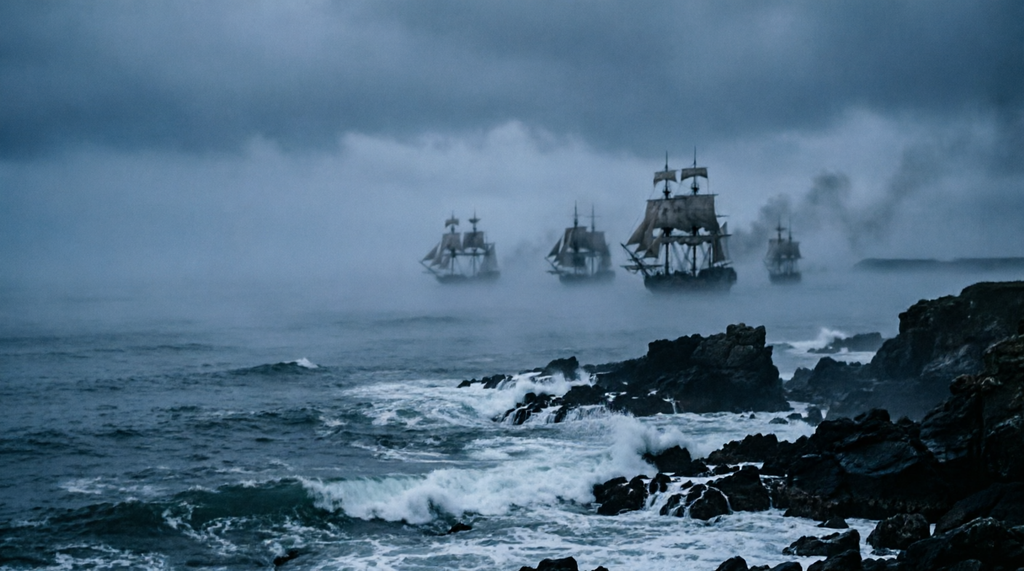
Arnold uses metaphors in “Dover Beach” to make abstract ideas easier to see and feel. Instead of simply saying that faith is declining or that people are confused, he compares faith to a retreating sea and human life to a dark battlefield. These images give emotional force to the poem’s ideas.
The practical purpose of the metaphors
The metaphors help Arnold explain ideas that are difficult to describe directly:
- loss of faith
- human suffering
- emotional sadness
- uncertainty
- fear
- conflict
- loneliness
- spiritual emptiness
- the search for stability
- the importance of human love
In school
Students often encounter these metaphors in:
- poetry analysis
- English literature exams
- essay questions
- short-answer questions
- classroom discussions
- literary-device exercises
In writing
A good literary essay might explain that the “Sea of Faith” is an extended metaphor for religious belief.
A stronger answer then explains how the metaphor develops: the sea was once full, but it now retreats, leaving the shore exposed.
In everyday speech
People rarely use Arnold’s exact metaphors in normal conversation. However, the same ideas appear in ordinary expressions such as:
- “My confidence disappeared.”
- “Everything feels uncertain.”
- “He lost his sense of direction.”
- “The situation became darker.”
- “She felt exposed.”
The poem turns these simple human feelings into memorable poetic images.
A useful distinction
A metaphor says one thing is another thing to create a comparison.
A simile uses words such as like or as.
For example:
- Metaphor: “The Sea of Faith” — faith is presented as a sea.
- Simile: the world “like a land of dreams” — the comparison is made with “like.”
- Symbol: the sea can also suggest change, uncertainty, and the movement of life.
That distinction matters because many online explanations mix these devices together.
Main Section: 60 Metaphors and Metaphorical Images in Dover Beach
The following 60 examples explain the poem’s major metaphors, symbols, similes, and closely related images. Some are direct metaphors, while others belong to the poem’s larger metaphorical system. This wider approach is useful because Arnold builds meaning across the whole poem rather than placing one isolated metaphor on each line.
1. The Sea
Meaning: The sea becomes a broad image of human experience.
Real explanation: Arnold starts with a real sea, but its changing movement soon connects with human sadness and suffering.
Sample sentence: The sea acts as a metaphor for the changing condition of human life.
When to use it: Use it when discussing the poem’s central imagery.
When NOT to use it: Do not say the sea has only one fixed meaning.
Alternatives: ocean of life; changing world; human experience.
Difficulty: Easy
Tone: Neutral
2. The Calm Sea
Meaning: The calm sea suggests outward peace.
Real explanation: The opening looks peaceful, but the poem soon reveals sadness beneath that beauty.
Sample sentence: The calm sea creates a contrast with the speaker’s troubled thoughts.
When to use it: When discussing contrast.
When NOT to use it: Do not claim that Arnold sees nature as completely happy.
Alternatives: peaceful surface; quiet scene; outward calm.
Difficulty: Easy
Tone: Neutral
3. The Full Tide
Meaning: Fullness suggests strength, completeness, and abundance.
Real explanation: The idea becomes especially important when Arnold later describes the “Sea of Faith” as once being “at the full.”
Sample sentence: The full tide prepares readers for the later image of strong religious faith.
When to use it: When connecting stanza one with stanza three.
When NOT to use it: Do not treat every reference to water as automatically religious.
Alternatives: abundance; fullness; strength.
Difficulty: Easy
Tone: Neutral
4. The Moon-Blanched Land
Meaning: The pale land creates an almost ghostly image.
Real explanation: Moonlight makes the land beautiful but also cold and distant.
Sample sentence: The moon-blanched land creates a quiet but slightly unsettling atmosphere.
When to use it: When discussing visual imagery.
When NOT to use it: Do not call this a central metaphor.
Alternatives: pale landscape; silvered shore; moonlit land.
Difficulty: Medium
Tone: Literary
5. The Grating Roar
Meaning: The harsh sound suggests pain beneath beauty.
Real explanation: The beach first looks peaceful, but the sound of the pebbles changes the mood.
Sample sentence: The grating roar introduces the poem’s deeper feeling of sadness.
When to use it: When explaining sound imagery.
When NOT to use it: Do not say it literally means war at this point.
Alternatives: harsh sound; painful noise; disturbing roar.
Difficulty: Easy
Tone: Neutral
6. The Waves
Meaning: The waves suggest repeated movement and recurring suffering.
Real explanation: The waves move forward and backward. Arnold connects this repeated motion with the continuing experience of human misery.
Sample sentence: The waves become an image of the repeated rise and fall of suffering.
When to use it: When explaining the poem’s connection between nature and humanity.
When NOT to use it: Do not reduce the waves to a single meaning.
Alternatives: cycle of suffering; recurring pain; changing human condition.
Difficulty: Easy
Tone: Neutral
7. The Pebbles
Meaning: The pebbles help represent human vulnerability.
Real explanation: The waves pull and throw the pebbles around. This movement can suggest how powerless people may feel in a troubled world.
Sample sentence: The restless pebbles reinforce the poem’s sense of human instability.
When to use it: When discussing the beach imagery.
When NOT to use it: Avoid claiming Arnold explicitly says people are pebbles.
Alternatives: vulnerable individuals; helpless objects; exposed humanity.
Difficulty: Medium
Tone: Literary
8. The Repeated Movement of the Waves
Meaning: Repetition suggests the continuing cycle of sorrow.
Real explanation: The waves “begin” and “cease” repeatedly. Their motion becomes a model for recurring human suffering.
Sample sentence: The repeated waves suggest that human misery does not simply disappear.
When to use it: When explaining the poem’s cyclical structure.
When NOT to use it: Do not call this only a sound device.
Alternatives: cycle; repetition; recurring struggle.
Difficulty: Medium
Tone: Neutral
9. The “Eternal Note of Sadness”
Meaning: The phrase turns sadness into a lasting sound.
Real explanation: Arnold hears more than physical waves. He hears a sound that seems to express a permanent part of human existence.
Sample sentence: The “eternal note of sadness” connects natural sound with human suffering.
When to use it: When discussing the poem’s central emotional idea.
When NOT to use it: Do not say the sea literally makes a human emotion.
Alternatives: lasting sorrow; permanent sadness; human misery.
Difficulty: Easy
Tone: Literary
10. The Sea as Human Misery
Meaning: The movement of the sea becomes a metaphor for suffering.
Real explanation: Arnold connects the sound of the waves with Sophocles’ idea of the “ebb and flow” of human misery.
Sample sentence: The sea’s movement mirrors the changing but recurring nature of human suffering.
When to use it: This is one of the strongest points for an exam answer.
When NOT to use it: Do not say Arnold invented the idea of comparing tides with suffering.
Alternatives: ocean of sorrow; ebb and flow of suffering; human pain.
Difficulty: Easy
Tone: Formal
11. The “Turbid Ebb and Flow” of Human Misery
Meaning: Human misery is imagined as troubled water.
Real explanation: “Turbid” means cloudy or muddy. The phrase suggests that human suffering is confused, unstable, and difficult to escape.
Sample sentence: Arnold uses water imagery to portray human misery as a troubled current.
When to use it: When discussing the Sophocles reference.
When NOT to use it: Do not treat Sophocles as merely decorative.
Alternatives: troubled suffering; changing misery; human turmoil.
Difficulty: Medium
Tone: Formal
12. Sophocles’ Sea
Meaning: The Aegean Sea connects ancient suffering with modern suffering.
Real explanation: Arnold imagines Sophocles hearing the same kind of sadness centuries earlier.
Sample sentence: The Aegean image shows that suffering is not limited to Arnold’s own age.
When to use it: When explaining the classical allusion.
When NOT to use it: Do not call Sophocles a metaphor himself.
Alternatives: ancient sea; timeless suffering; classical parallel.
Difficulty: Medium
Tone: Formal
13. The “Sea of Faith”
Meaning: The Sea of Faith is the poem’s central metaphor for religious faith.
Real explanation: Arnold imagines faith as a sea that once covered the world but is now withdrawing. The image makes an invisible spiritual change visible.
Sample sentence: The “Sea of Faith” represents a religious certainty that Arnold feels is disappearing.
When to use it: Almost any essay about metaphor in “Dover Beach.”
When NOT to use it: Do not say it means the physical English Channel.
Alternatives: religious certainty; spiritual faith; shared belief.
Difficulty: Easy
Tone: Formal
14. Faith “At the Full”
Meaning: Fullness represents strong and widespread faith.
Real explanation: Arnold imagines a time when faith was powerful and surrounded the world.
Sample sentence: The full Sea of Faith represents a world that once felt spiritually secure.
When to use it: When explaining the past.
When NOT to use it: Avoid presenting Arnold’s historical claim as an objective fact.
Alternatives: strong belief; spiritual fullness; religious confidence.
Difficulty: Easy
Tone: Formal
15. Faith as a Bright Girdle
Meaning: Faith is imagined as a bright belt around the earth.
Real explanation: Arnold uses a simile here. Faith appears to surround and hold the world together.
Sample sentence: The bright girdle image presents faith as something beautiful and protective.
When to use it: When discussing simile within the larger Sea of Faith metaphor.
When NOT to use it: Do not label this line a direct metaphor without qualification.
Alternatives: protective belt; spiritual covering; binding faith.
Difficulty: Medium
Tone: Literary
16. The Bright Girdle
Meaning: Brightness suggests hope, order, and spiritual confidence.
Real explanation: The image contrasts sharply with the later darkness and exposure.
Sample sentence: The bright girdle symbolizes the beauty associated with the earlier age of faith.
When to use it: When explaining contrast.
When NOT to use it: Do not claim that every mention of brightness means Christianity.
Alternatives: light of belief; spiritual protection; hopeful covering.
Difficulty: Easy
Tone: Formal
17. The Withdrawing Sea
Meaning: The retreating sea represents declining faith.
Real explanation: This is the key movement of the poem. Faith is not shown as suddenly disappearing. It slowly pulls away.
Sample sentence: The withdrawing sea gives physical form to the speaker’s fear that religious certainty is fading.
When to use it: When discussing change or loss.
When NOT to use it: Do not say the poem proves that everyone had lost faith.
Alternatives: fading belief; retreating certainty; spiritual decline.
Difficulty: Easy
Tone: Formal
18. The “Melancholy” Roar
Meaning: The retreat of faith sounds like grief.
Real explanation: Arnold hears the withdrawal as a sad roar, suggesting that the loss of certainty has emotional consequences.
Sample sentence: The melancholy roar makes spiritual decline sound like a painful natural event.
When to use it: When explaining tone.
When NOT to use it: Do not separate the sound from the Sea of Faith metaphor.
Alternatives: sorrowful retreat; mournful sound; painful withdrawal.
Difficulty: Easy
Tone: Literary
19. The Retreating Faith
Meaning: Faith is presented as something physically moving away.
Real explanation: The metaphor turns an abstract social and spiritual change into an observable action.
Sample sentence: Arnold personifies faith as something that can retreat from the human world.
When to use it: When discussing metaphor and personification together.
When NOT to use it: Do not say faith literally moves.
Alternatives: declining faith; fading belief; spiritual withdrawal.
Difficulty: Easy
Tone: Formal
20. The Night Wind
Meaning: The night wind contributes to the sense of darkness and uncertainty.
Real explanation: It helps carry the withdrawing sound away, strengthening the feeling that faith is disappearing into an unknown space.
Sample sentence: The night wind adds to the poem’s atmosphere of uncertainty.
When to use it: When discussing the third stanza.
When NOT to use it: Do not give it one fixed symbolic meaning.
Alternatives: dark force; uncertain future; surrounding darkness.
Difficulty: Medium
Tone: Literary
21. The “Naked Shingles”
Meaning: The exposed stones suggest a world left spiritually bare.
Real explanation: Once the Sea of Faith retreats, the shore is exposed. The image suggests vulnerability and emptiness.
Sample sentence: The naked shingles represent a world exposed after the retreat of faith.
When to use it: When discussing spiritual loss.
When NOT to use it: Do not claim shingles literally represent people.
Alternatives: exposed world; spiritual emptiness; barren shore.
Difficulty: Easy
Tone: Formal
22. The Naked World
Meaning: “Naked” suggests exposure and lack of protection.
Real explanation: The word creates a strong contrast with the earlier image of the world being covered by a bright girdle.
Sample sentence: The naked world contrasts with the protected world imagined earlier in the poem.
When to use it: When analyzing contrast.
When NOT to use it: Do not read the word only in its physical sense.
Alternatives: exposed world; unprotected life; bare existence.
Difficulty: Easy
Tone: Formal
23. The Exposed Shore
Meaning: The shore suggests vulnerability after loss.
Real explanation: The retreating water reveals what was hidden beneath it. This becomes an image of what happens when certainty disappears.
Sample sentence: The exposed shore mirrors the speaker’s fear of a spiritually unprotected world.
When to use it: When linking natural imagery to theme.
When NOT to use it: Do not claim that the shore itself is the main metaphor.
Alternatives: vulnerable world; uncovered life; exposed humanity.
Difficulty: Easy
Tone: Neutral
24. The World as a “Land of Dreams”
Meaning: The world appears beautiful but may not provide what people expect.
Real explanation: Arnold uses a simile to contrast appearance with reality. The world looks wonderful, but the speaker says it lacks joy, certainty, and peace.
Sample sentence: The land of dreams represents the attractive appearance of a world that cannot guarantee happiness.
When to use it: When discussing appearance versus reality.
When NOT to use it: Do not call it a simple positive image.
Alternatives: beautiful illusion; attractive world; deceptive appearance.
Difficulty: Easy
Tone: Literary
25. The Dream World
Meaning: A dream can suggest beauty without lasting certainty.
Real explanation: Dreams may look real while we experience them, but they do not provide stable reality. Arnold uses that tension to question the world’s apparent beauty.
Sample sentence: The dream image suggests that outward beauty cannot solve inner uncertainty.
When to use it: When discussing illusion.
When NOT to use it: Do not say the speaker literally believes life is a dream.
Alternatives: illusion; imagined paradise; uncertain reality.
Difficulty: Easy
Tone: Neutral
26. The World Without Light
Meaning: Lack of light suggests lack of knowledge, hope, or certainty.
Real explanation: Light is listed with joy, love, certainty, and peace. Its absence therefore carries emotional and spiritual weight.
Sample sentence: The absence of light reflects the speaker’s loss of spiritual confidence.
When to use it: When analyzing symbolism.
When NOT to use it: Do not reduce “light” to physical daylight.
Alternatives: loss of hope; darkness; lack of guidance.
Difficulty: Easy
Tone: Formal
27. The World Without Certitude
Meaning: The world becomes a place without secure answers.
Real explanation: Arnold links the loss of faith with the loss of certainty.
Sample sentence: The poem presents spiritual doubt as a major source of human insecurity.
When to use it: When discussing the Victorian crisis of faith.
When NOT to use it: Do not say Arnold rejects every form of knowledge.
Alternatives: uncertainty; doubt; lack of assurance.
Difficulty: Easy
Tone: Formal
28. The World Without Peace
Meaning: Peace is presented as something the world cannot reliably provide.
Real explanation: The speaker moves from beautiful scenery to a bleak judgment about human life.
Sample sentence: The absence of peace prepares readers for the final battlefield metaphor.
When to use it: When explaining the poem’s progression.
When NOT to use it: Do not treat this as a literal geographical statement.
Alternatives: unrest; conflict; instability.
Difficulty: Easy
Tone: Formal
29. The World as a “Darkling Plain”
Meaning: The darkling plain is a metaphorical picture of human life.
Real explanation: The speaker imagines himself and his companion on a dark, open plain where people fight without understanding what is happening.
Sample sentence: The darkling plain represents a confused and frightening human world.
When to use it: Essential for an essay about the ending.
When NOT to use it: It is technically introduced through a comparison, so calling it a simple direct metaphor can be too narrow.
Alternatives: dark world; confused landscape; human battlefield.
Difficulty: Easy
Tone: Formal
30. Darkness
Meaning: Darkness represents uncertainty and lack of guidance.
Real explanation: The poem moves toward darkness as the Sea of Faith withdraws.
Sample sentence: Darkness becomes a recurring image for spiritual and moral uncertainty.
When to use it: When discussing the final stanza.
When NOT to use it: Do not claim darkness always means evil.
Alternatives: uncertainty; confusion; absence of guidance.
Difficulty: Easy
Tone: Neutral
31. The Battlefield
Meaning: Human life is imagined as a battlefield.
Real explanation: The speaker sees people struggling in a world where clear understanding has disappeared.
Sample sentence: The battlefield metaphor shows Arnold’s fear of uncontrolled human conflict.
When to use it: When discussing conflict.
When NOT to use it: Do not say the poem describes one specific historical battle.
Alternatives: field of struggle; human conflict; troubled world.
Difficulty: Easy
Tone: Formal
32. “Ignorant Armies”
Meaning: The armies represent people who fight without understanding.
Real explanation: The final image is powerful because the fighters themselves do not fully understand the situation.
Sample sentence: The ignorant armies represent humanity struggling in confusion.
When to use it: When explaining the final metaphorical image.
When NOT to use it: Do not interpret “ignorant” simply as unintelligent.
Alternatives: confused people; uninformed groups; blind conflict.
Difficulty: Medium
Tone: Formal
33. The “Clash by Night”
Meaning: Conflict happens without clear understanding.
Real explanation: Night makes it difficult to see the enemy, the battlefield, or the reason for the fight.
Sample sentence: “Clash by night” represents human conflict carried out without certainty or direction.
When to use it: In essays about uncertainty and conflict.
When NOT to use it: Do not interpret it only as military violence.
Alternatives: confused struggle; blind conflict; chaotic fighting.
Difficulty: Easy
Tone: Formal
34. The Night Battlefield
Meaning: The dark battlefield represents a world without clear moral direction.
Real explanation: People struggle, but darkness prevents them from seeing clearly.
Sample sentence: Arnold’s night battlefield shows how uncertainty can turn human life into confused struggle.
When to use it: When connecting darkness and conflict.
When NOT to use it: Avoid saying the battlefield is literally located at Dover.
Alternatives: dark world; moral confusion; chaotic society.
Difficulty: Easy
Tone: Formal
35. Struggle and Flight
Meaning: The paired images suggest both fighting and escaping.
Real explanation: People either struggle or try to get away. Neither action brings real certainty.
Sample sentence: “Struggle and flight” captures the restless fear of the final stanza.
When to use it: When discussing human behavior.
When NOT to use it: Do not reduce “flight” to birds.
Alternatives: conflict and escape; fear and resistance; fighting and fleeing.
Difficulty: Easy
Tone: Neutral
36. The Sea as Time
Meaning: The endless movement of the sea can suggest the passage of time.
Real explanation: The poem links ancient Sophocles with Arnold’s own age. The same sea sound connects different historical periods.
Sample sentence: The sea creates a sense of continuity across human history.
When to use it: When discussing the Sophocles reference.
When NOT to use it: Do not claim time is the poem’s only meaning.
Alternatives: passing time; historical continuity; timeless nature.
Difficulty: Medium
Tone: Formal
37. The Sea as Change
Meaning: The changing tide suggests that conditions do not remain fixed.
Real explanation: The Sea of Faith is especially important because it moves from fullness to retreat.
Sample sentence: The changing sea becomes a natural model for social and spiritual change.
When to use it: When explaining the poem’s structure.
When NOT to use it: Do not say change is always negative.
Alternatives: transformation; movement; transition.
Difficulty: Easy
Tone: Neutral
38. The Shore as a Boundary
Meaning: The shore sits between land and sea.
Real explanation: This physical border supports the poem’s larger concern with changing states: faith and doubt, beauty and sadness, certainty and uncertainty.
Sample sentence: The shore becomes a useful image for a world caught between old belief and new doubt.
When to use it: When discussing the poem’s transitional setting.
When NOT to use it: Do not claim Arnold directly names the shore as a metaphor.
Alternatives: border; threshold; dividing line.
Difficulty: Medium
Tone: Formal
39. The Tide as Spiritual Change
Meaning: The tide’s movement mirrors the movement of faith.
Real explanation: Arnold uses a natural process to express an abstract historical and spiritual change.
Sample sentence: The retreating tide gives a physical shape to the decline of faith.
When to use it: One of the best explanations of the poem’s extended metaphor.
When NOT to use it: Do not say every tide reference has religious meaning.
Alternatives: spiritual retreat; loss of belief; changing faith.
Difficulty: Easy
Tone: Formal
40. The Sea’s Roar as Human Sorrow
Meaning: The natural roar becomes a voice for human pain.
Real explanation: Arnold hears sadness in the sound and connects it to suffering across history.
Sample sentence: The sea’s roar becomes an emotional voice for humanity.
When to use it: When explaining auditory imagery.
When NOT to use it: Do not say the sea actually speaks.
Alternatives: voice of sorrow; sound of suffering; cry of humanity.
Difficulty: Easy
Tone: Literary
41. The “Ebb and Flow” of Life
Meaning: Life is imagined as a changing tide.
Real explanation: Human misery rises and falls like water. This makes suffering feel recurring rather than isolated.
Sample sentence: Arnold’s ebb-and-flow image suggests that suffering is part of the continuing human condition.
When to use it: When discussing the Sophoclean allusion.
When NOT to use it: Do not claim that all human experiences are equally painful.
Alternatives: rise and fall; cycle of life; changing fortunes.
Difficulty: Easy
Tone: Neutral
42. Faith as Protection
Meaning: The bright girdle suggests that faith once surrounded and protected people.
Real explanation: The image is not only about belief. It also suggests emotional security and a sense of order.
Sample sentence: Arnold presents earlier faith as a source of spiritual protection.
When to use it: When explaining the girdle simile.
When NOT to use it: Do not claim the poem says faith physically protected society.
Alternatives: spiritual shelter; moral support; protective belief.
Difficulty: Medium
Tone: Formal
43. Loss of the Girdle
Meaning: The disappearing covering represents exposure.
Real explanation: The poem moves from a world surrounded by a bright image to a world with “naked” edges.
Sample sentence: The contrast between the girdle and naked shingles emphasizes the loss of protection.
When to use it: When discussing contrast.
When NOT to use it: Do not analyze the girdle without mentioning the later exposure.
Alternatives: lost protection; spiritual exposure; uncovered world.
Difficulty: Easy
Tone: Formal
44. The World as an Exposed Body
Meaning: The poem’s clothing imagery makes the world seem almost like a body.
Real explanation: The bright girdle covers the earth, while the retreating sea leaves the world naked.
Sample sentence: Arnold’s clothing imagery makes spiritual loss feel physical and personal.
When to use it: When discussing the extended image of clothing.
When NOT to use it: Do not turn the image into a literal human body.
Alternatives: exposed humanity; uncovered world; vulnerable existence.
Difficulty: Medium
Tone: Literary
45. Beauty as a Mask
Meaning: The beautiful setting hides deeper sadness.
Real explanation: The first stanza begins with calm water, moonlight, and peaceful cliffs. Then the harsh sound of the pebbles changes everything.
Sample sentence: Natural beauty acts almost like a mask covering the speaker’s deeper anxiety.
When to use it: When discussing contrast.
When NOT to use it: Do not say Arnold thinks nature is fake.
Alternatives: beautiful surface; hidden sadness; contrast between appearance and reality.
Difficulty: Easy
Tone: Neutral
46. Sound as a Messenger
Meaning: The waves carry a thought from nature into the speaker’s mind.
Real explanation: The speaker hears the sea, thinks of Sophocles, and then develops the Sea of Faith metaphor.
Sample sentence: The sound of the sea carries the speaker from physical observation to philosophical reflection.
When to use it: When analyzing the poem’s movement of thought.
When NOT to use it: Do not call this a direct metaphor without explanation.
Alternatives: bridge between nature and thought; symbolic sound; emotional trigger.
Difficulty: Medium
Tone: Formal
47. Nature as a Teacher
Meaning: The sea helps the speaker understand human life.
Real explanation: Arnold looks at and listens to nature before making his larger claims about suffering and faith.
Sample sentence: Nature becomes a source of reflection rather than a simple background.
When to use it: When discussing Romantic and Victorian poetic traditions.
When NOT to use it: Do not claim nature gives the speaker a clear solution.
Alternatives: natural lesson; reflective landscape; teacher of experience.
Difficulty: Medium
Tone: Formal
48. The Beach as a Place of Revelation
Meaning: The beach becomes the setting where the speaker discovers a darker truth.
Real explanation: The speaker begins with visual beauty and ends with a disturbing vision of humanity.
Sample sentence: Dover Beach functions as the place where beauty gives way to difficult reflection.
When to use it: When analyzing the poem as a mental journey.
When NOT to use it: Do not call the beach itself the only metaphor.
Alternatives: place of discovery; reflective setting; threshold of thought.
Difficulty: Medium
Tone: Formal
49. The Window
Meaning: The window separates the observer from the outside world.
Real explanation: The speaker invites his companion to look and listen from the window. It becomes a small boundary between private love and the wider world.
Sample sentence: The window frames the beautiful scene before the poem moves toward wider human concerns.
When to use it: When discussing setting and perspective.
When NOT to use it: Do not claim the window has a fixed symbolic meaning.
Alternatives: viewpoint; frame; boundary.
Difficulty: Medium
Tone: Literary
50. The Night as Uncertainty
Meaning: Night provides the poem’s strongest image of limited knowledge.
Real explanation: By the end, the darkness has moved from the physical setting into the speaker’s vision of human life.
Sample sentence: Night changes from a natural condition into a metaphorical sign of uncertainty.
When to use it: When discussing the poem’s progression.
When NOT to use it: Do not say night always symbolizes sadness in poetry.
Alternatives: darkness; uncertainty; lack of vision.
Difficulty: Easy
Tone: Formal
51. The World Without Joy
Meaning: Joy is treated as something that has disappeared.
Real explanation: The speaker lists several things the world lacks. The list creates a sense of spiritual emptiness.
Sample sentence: The absence of joy reinforces Arnold’s bleak view of the modern world.
When to use it: When discussing the final stanza.
When NOT to use it: Do not claim the poem denies every human happiness.
Alternatives: emotional emptiness; sadness; loss of happiness.
Difficulty: Easy
Tone: Formal
52. The World Without Love
Meaning: Love becomes one of the things threatened by a troubled world.
Real explanation: Yet Arnold immediately asks his companion to remain true to one another. This creates an important tension.
Sample sentence: Although the world lacks certainty, personal love may still offer a form of human support.
When to use it: When discussing the ending.
When NOT to use it: Do not say love completely solves the poem’s problems.
Alternatives: human connection; loyalty; emotional support.
Difficulty: Easy
Tone: Formal
53. Love as an Anchor
Meaning: Love can provide stability in an uncertain world.
Real explanation: Arnold cannot restore the retreating Sea of Faith, so he turns toward personal loyalty.
Sample sentence: The speaker treats love as a small source of stability in a confused world.
When to use it: When discussing the final plea.
When NOT to use it: Do not claim Arnold replaces religion with romance in a simple way.
Alternatives: emotional anchor; human bond; personal trust.
Difficulty: Easy
Tone: Formal
54. “Be True” as Moral Shelter
Meaning: Loyalty becomes a response to uncertainty.
Real explanation: The speaker cannot control the world, but he can ask two people to remain honest with each other.
Sample sentence: The call to remain true offers a personal answer to a larger crisis.
When to use it: In conclusion paragraphs.
When NOT to use it: Do not call it a metaphor by itself.
Alternatives: remain loyal; stay honest; hold together.
Difficulty: Easy
Tone: Formal
55. The Battlefield as Society
Meaning: The final battlefield can represent a confused society.
Real explanation: The poem does not identify one specific war. The image is broad enough to suggest human conflict more generally.
Sample sentence: The battlefield expands the poem from personal sadness to social conflict.
When to use it: When discussing the final stanza.
When NOT to use it: Avoid claiming it refers only to one Victorian war.
Alternatives: troubled society; social conflict; human struggle.
Difficulty: Medium
Tone: Formal
56. Ignorance as Darkness
Meaning: Lack of understanding is connected with night.
Real explanation: The armies cannot clearly see each other. The physical darkness reflects intellectual and moral confusion.
Sample sentence: Darkness and ignorance work together in the final image.
When to use it: When discussing the final metaphor.
When NOT to use it: Do not say every character in the poem is ignorant.
Alternatives: lack of knowledge; confusion; blindness.
Difficulty: Easy
Tone: Formal
57. Conflict as Noise
Meaning: The final “clash” echoes the earlier roar of the sea.
Real explanation: The poem begins with the sound of waves and ends with the imagined noise of armies.
Sample sentence: Arnold transforms the sound of the sea into the sound of human conflict.
When to use it: Excellent for structural analysis.
When NOT to use it: Do not ignore the connection between the opening and ending.
Alternatives: noise of conflict; human roar; chaotic sound.
Difficulty: Medium
Tone: Formal
58. The Sea-to-Battlefield Transformation
Meaning: The poem gradually changes one metaphorical landscape into another.
Real explanation: The opening sea leads to human misery, then to the Sea of Faith, and finally to a dark battlefield.
Sample sentence: Arnold’s imagery moves from the natural world to the human world.
When to use it: For advanced literary analysis.
When NOT to use it: Do not treat each image as unrelated.
Alternatives: metaphorical progression; image transformation; symbolic movement.
Difficulty: Advanced
Tone: Formal
59. The Retreat as Historical Change
Meaning: The retreating sea can suggest a major change in the age.
Real explanation: Arnold writes during a period when scientific discoveries and intellectual changes challenged older religious certainties. The poem captures anxiety about that change rather than giving a simple historical argument.
Sample sentence: The retreating Sea of Faith reflects anxiety about a changing intellectual age.
When to use it: When adding historical context.
When NOT to use it: Do not claim one single event caused the loss of faith.
Alternatives: cultural change; Victorian uncertainty; changing beliefs.
Difficulty: Advanced
Tone: Formal
60. The Whole Poem as an Extended Metaphorical Journey
Meaning: “Dover Beach” moves from peaceful nature to human uncertainty.
Real explanation: The sea, suffering, faith, exposure, darkness, and battle form a connected chain of images. This is why the poem feels larger than a simple description of a beach.
Sample sentence: Arnold builds an extended metaphorical journey from the sea to the human condition.
When to use it: Best for a final essay paragraph.
When NOT to use it: Do not call every individual word a metaphor.
Alternatives: extended metaphor; symbolic journey; metaphorical progression.
Difficulty: Advanced
Tone: Formal
Real-Life Conversations
The metaphors in “Dover Beach” are most useful when students can explain them in ordinary language. These conversations show how a teacher, student, friend, or writer might discuss the poem naturally. The key skill is not memorizing difficult words; it is being able to say what each image means and why Arnold chose it.
Conversation 1: Student and Teacher
Student: I wrote that the Sea of Faith means the ocean.
Teacher: It is an ocean image, but Arnold is not really talking about seawater there.
Student: So what does it mean?
Teacher: He imagines religious faith as a sea. It was once full, but now it is pulling away.
Student: So the retreating water means faith is declining?
Teacher: Exactly.
🎯 Lesson: The “Sea of Faith” is the central metaphor for religious faith and its retreat.
Conversation 2: Two Friends Studying
Mia: Why does the poem suddenly mention armies?
Noah: Because Arnold is talking about war?
Mia: Partly, but I think the army is bigger than that.
Noah: How?
Mia: The people are fighting in darkness, and they do not understand what is happening. It can represent humanity struggling without certainty.
Noah: So it is a metaphor for confusion?
Mia: Yes. That is why the ending feels so bleak.
🎯 Lesson: The “ignorant armies” represent confused human beings struggling in an uncertain world.
Conversation 3: Exam Preparation
Teacher: Give me one metaphor from “Dover Beach.”
Student: “Sea of Faith.”
Teacher: Good. Explain it.
Student: Arnold compares faith to a sea. The sea was once full, but it is withdrawing. This represents the loss of religious certainty.
Teacher: Excellent. Now give me a second one.
Student: The darkling plain represents a confused and dangerous world.
🎯 Lesson: A strong answer names the image and explains the idea behind it.
Conversation 4: Parent Helping With Homework
Parent: What are you studying?
Student: Metaphors in “Dover Beach.”
Parent: What is the hardest one?
Student: The Sea of Faith.
Parent: Think of it this way: imagine faith as water surrounding the world. If the water moves away, what happens?
Student: The land is exposed.
Parent: Right. That is the point. Arnold uses the beach to show what the world feels like after certainty disappears.
🎯 Lesson: Think about what happens in the physical image, then connect it to the abstract idea.
Conversation 5: Quick Revision Before an Exam
Student: I have five minutes. What should I remember?
Friend: Remember four things: sea, faith, darkness, and armies.
Student: And what do they mean?
Friend: The sea connects with suffering. The Sea of Faith means religious belief. Darkness means uncertainty. The armies show confused conflict.
Student: That is much easier.
🎯 Lesson: Remember the metaphorical progression, not just isolated quotations.
Everyday Usage
The expressions in “Dover Beach” belong mainly to literary English, not everyday conversation. Students, teachers, writers, and critics use them when discussing poetry, faith, uncertainty, conflict, and human experience. In ordinary speech, people usually express the same ideas with simpler words such as “loss of faith,” “confusion,” “uncertainty,” or “feeling exposed.”
Conversation
A person would rarely say:
“I am standing on a darkling plain.”
Instead, they might say:
“Everything feels confusing right now.”
Writing
The metaphors work especially well in:
- poetry
- literary essays
- creative writing
- reflective writing
- book reviews
- academic analysis
Books
Literary writers often use landscapes to represent inner feelings. Arnold’s sea is a strong example because the physical setting changes as the speaker’s thoughts change.
Movies
Film often uses similar visual ideas. A dark road, empty field, stormy ocean, or fading light can suggest uncertainty without directly stating it.
Poetry
Poetry makes heavy use of metaphor because it can express a complicated feeling in a few words.
Arnold’s “Sea of Faith” is memorable because readers can see the idea of faith as water.
Emails
These metaphors are usually too literary for ordinary professional email.
Instead of:
“The Sea of Faith is retreating from our company.”
a manager would normally write:
“The team is losing confidence in the current plan.”
Text Messages
Friends might use simplified versions:
“Everything feels so dark lately.”
That communicates a similar emotional idea without using Arnold’s literary language.
A poetic caption might use:
“Trying to find light on a darkling plain.”
This is creative rather than normal everyday English.
A literature student might post:
“The Sea of Faith remains one of the strongest metaphors in Victorian poetry.”
X
A short post might say:
“Arnold’s sea is beautiful until you hear what it means.”
The original poem’s metaphors would rarely fit business writing directly. A similar idea could be expressed more clearly:
“When certainty disappears, trust becomes more important.”
School Assignments
This is where the metaphors are most useful.
A strong sentence might be:
Arnold’s “Sea of Faith” metaphor turns the abstract idea of declining religious certainty into a physical image of water slowly withdrawing from the shore.
That sentence does three things:
- names the device
- explains the comparison
- connects it to the theme
Writing Tips
The best way to write about “Dover Beach” is to explain the metaphor, its effect, and its connection to the poem’s theme. Do not simply list poetic devices. A strong answer shows how Arnold moves from the peaceful sea to human misery, the retreating Sea of Faith, and finally the dark battlefield.
Best situations
Use these metaphors when discussing:
- loss of faith
- uncertainty
- human suffering
- conflict
- Victorian anxiety
- love
- isolation
- appearance versus reality
Formal vs. informal
The actual phrases are literary and formal.
For example:
Formal/literary:
Arnold presents the retreating Sea of Faith as a symbol of spiritual uncertainty.
Simple:
Arnold uses the sea to show that people are losing faith.
Both are correct. The first is better for an academic essay.
Speaking vs. writing
When speaking, explain the metaphor in plain language.
When writing, you can use literary terms such as:
- extended metaphor
- symbolism
- imagery
- simile
- personification
- allusion
- contrast
- auditory imagery
British vs. American usage
The poem was written in nineteenth-century Britain, and some vocabulary may feel old-fashioned to modern American readers.
For example:
- shore is still common
- girdle has an older literary sense of a belt or band
- shingles here means small stones on a beach, not roof material
- certitude means certainty
The metaphorical meaning matters more than the regional vocabulary.
Children vs. adults
For younger students:
“Arnold compares faith to water. The water goes away, so the world feels less safe.”
For older students:
“The retreating Sea of Faith represents the erosion of religious certainty and the resulting exposure of the modern world.”
Professional communication
Do not use “darkling plain” or “ignorant armies” in normal workplace messages unless you are intentionally being literary.
Instead say:
- unclear situation
- lack of direction
- uncertainty
- conflict
- loss of confidence
Creative writing
These images can inspire original writing, but avoid copying Arnold’s phrases.
For example:
“Her confidence was a lighthouse slowly losing power.”
That uses a similar technique while creating a new metaphor.
Pro Tip
When writing a literature answer, use this simple formula:
Metaphor → Meaning → Effect → Theme
Example:
Arnold’s “Sea of Faith” is a metaphor for religious belief. Its retreat suggests the loss of certainty. This creates a sad and anxious mood and supports the poem’s theme of spiritual uncertainty.
That is much stronger than simply writing, “This is a metaphor.”
Common Mistakes
Most mistakes happen because students memorize the famous phrases without checking what literary device each phrase actually uses. “Sea of Faith” is a metaphor, while “like the folds of a bright girdle” and “like a land of dreams” are similes. A good answer should recognize both the comparison and the exact device.
| Mistake | Reason | Correct version | Practical explanation |
|---|---|---|---|
| Calling every image a metaphor | Not every image compares two things | Identify the exact device | Check for “like” or “as” |
| Saying Sea of Faith means the ocean | It misses the abstract meaning | It represents religious faith | Explain the metaphor |
| Calling “land of dreams” a direct metaphor | Arnold uses “like” | It is a simile | Mention the comparison |
| Saying darkling plain means a real place | It is metaphorical | It represents confused human life | Explain the larger image |
| Saying ignorant armies mean one historical army | The image is broader | They represent confused humanity | Avoid over-specific claims |
| Saying the poem is only about nature | Nature leads to philosophy | The sea triggers deeper reflection | Follow the poem’s movement |
| Ignoring Sophocles | The allusion connects ancient and modern suffering | Explain the historical connection | Mention timeless human misery |
| Saying faith suddenly disappears | The image emphasizes retreat | Faith gradually withdraws | Focus on the tide |
| Treating the poem as completely hopeless | The speaker turns to love | Love offers personal connection | Discuss the final plea |
| Listing devices without explaining them | A list does not show analysis | Explain effect and theme | Use the four-part formula |
Quick correction
Instead of:
“The sea is a metaphor.”
Write:
“Arnold uses the sea as a metaphorical image for the changing and troubled condition of human life.”
That tells the reader what, how, and why.
Practice Exercise
The best practice is to turn a simple statement into a literary explanation. For each exercise below, imagine you are answering a school question about “Dover Beach.” Try to use the relevant metaphor naturally rather than forcing a quotation into every sentence.
1. Simple idea
Basic sentence:
People are losing religious faith.
Rewrite:
The retreating Sea of Faith represents the gradual loss of religious certainty.
2. Simple idea
Basic sentence:
People are confused.
Rewrite:
The darkling plain presents human life as a place of confusion and uncertainty.
3. Simple idea
Basic sentence:
People suffer again and again.
Rewrite:
The repeated movement of the waves mirrors the recurring “ebb and flow” of human misery.
4. Simple idea
Basic sentence:
The world looks beautiful.
Rewrite:
The world appears like a land of dreams, although the speaker believes its beauty cannot provide certainty or peace.
5. Simple idea
Basic sentence:
Faith once gave people security.
Rewrite:
The bright girdle image suggests that faith once surrounded the world with a sense of order.
6. Simple idea
Basic sentence:
People feel exposed.
Rewrite:
The naked shingles suggest a world left spiritually exposed after the retreat of faith.
7. Simple idea
Basic sentence:
The world is full of conflict.
Rewrite:
The final battlefield metaphor presents human life as a confused struggle.
8. Simple idea
Basic sentence:
People do not understand the conflict.
Rewrite:
The ignorant armies suggest that people may struggle without understanding the forces around them.
9. Simple idea
Basic sentence:
Love can provide support.
Rewrite:
The speaker turns toward personal loyalty as a source of stability in an uncertain world.
10. Simple idea
Basic sentence:
The sea makes the speaker think.
Rewrite:
The sound of the sea carries the speaker from natural observation to a reflection on human suffering and faith.
Multiple Choice Questions
1. What does the “Sea of Faith” primarily represent?
A. The English Channel
B. Religious faith
C. A storm
D. Ancient Greece
Answer: B
2. What does the retreating Sea of Faith suggest?
A. Increasing wealth
B. Loss of religious certainty
C. A change in weather
D. A journey
Answer: B
3. “Like the folds of a bright girdle” is mainly an example of:
A. Simile
B. Hyperbole
C. Pun
D. Irony
Answer: A
4. What does the “darkling plain” suggest?
A. A peaceful garden
B. A confused and uncertain world
C. A real battlefield at Dover
D. A bright future
Answer: B
5. What do the “ignorant armies” represent?
A. One specific historical army
B. People struggling without understanding
C. Soldiers from Sophocles’ plays
D. The British Navy
Answer: B
6. Why does Arnold mention Sophocles?
A. describe a vacation
B. connect ancient human suffering with modern suffering
C. explain Greek geography
D. praise war
Answer: B
7. What does the repeated movement of the waves help suggest?
A. Permanent happiness
B. Recurring suffering
C. Wealth
D. Silence
Answer: B
8. Why are the “naked shingles” important?
A. show a crowded city
B. suggest a world exposed after faith retreats
C. describe a house
D. represent wealth
Answer: B
9. What is the main effect of darkness in the final stanza?
A. creates humor
B. suggests uncertainty and confusion
C. makes the speaker happy
D. describes a sunrise
Answer: B
10. What does the speaker’s appeal to his companion suggest?
A. Love can provide some human support in an uncertain world
B. Nature has solved every problem
C. War is necessary
D. Faith has completely returned
Answer: A
Answer Key
1-B, 2-B, 3-A, 4-B, 5-B, 6-B, 7-B, 8-B, 9-B, 10-A
Related Terms
“Dover Beach” is easier to understand when you separate metaphor from related literary devices. Metaphor explains one thing through another, while simile uses an explicit comparison. Symbolism gives an object or image a larger meaning, and imagery creates a sensory picture. Arnold uses all of these techniques together rather than relying on metaphor alone.
| Term | Meaning | Example in “Dover Beach” | Difference |
|---|---|---|---|
| Metaphor | Direct comparison | “Sea of Faith” | Presents faith as a sea |
| Simile | Comparison using “like” or “as” | Bright girdle / land of dreams | Explicit comparison |
| Symbolism | An image carries a larger idea | Sea | Suggests broader themes |
| Imagery | Sensory description | Moonlit sea | Helps readers see/hear the scene |
| Personification | Giving human qualities to nonhuman things | Retreating Faith | Makes an abstract idea act like something alive |
| Allusion | Reference to another work/person | Sophocles | Connects ancient and modern suffering |
| Contrast | Placing opposites together | Beauty vs. sadness | Highlights the poem’s tension |
| Extended metaphor | One comparison develops across a passage | Sea of Faith | Builds meaning over several images |
| Auditory imagery | Sound-based description | Grating roar | Makes the poem audible |
| Visual imagery | Sight-based description | Moon-blanched land | Makes the scene visible |
Metaphor vs. simile
This is the distinction students most often need.
Metaphor:
“Sea of Faith”
Faith is presented directly as a sea.
Simile:
The world is described as being “like” a land of dreams.
The comparison is announced with like.
Metaphor vs. symbol
A metaphor creates a comparison.
A symbol can carry several related meanings.
The sea in “Dover Beach” works in both ways. It participates in metaphors, but it also becomes a larger symbol of change, suffering, uncertainty, and spiritual loss.
Why the distinction matters
An exam answer that says:
“The Sea of Faith is a metaphor for religious faith.”
is accurate.
An answer that says:
“Everything in the poem is a metaphor.”
is too broad.
Precision makes literary analysis more convincing.
FAQs:
1. What is the most important metaphor in “Dover Beach”?
The most important metaphor is the “Sea of Faith.” Arnold imagines religious faith as a sea that was once full and surrounded the world. Its gradual retreat represents the speaker’s sense that religious certainty is disappearing. The metaphor is powerful because it turns an abstract idea—loss of faith—into something readers can clearly picture.
2. What does the Sea of Faith mean in “Dover Beach”?
The Sea of Faith represents religious faith and spiritual certainty. Arnold describes it as once being full, then slowly withdrawing and leaving the world exposed. The image suggests that the speaker feels modern life has lost some of the security once provided by shared religious belief. It is the central metaphor around which much of the poem’s later imagery develops.
3. What does the “darkling plain” symbolize?
The “darkling plain” represents a world filled with uncertainty, confusion, struggle, and fear. The speaker imagines people on a dark battlefield where armies clash without being able to see clearly. The darkness is important because it suggests more than physical night. It reflects the lack of certainty and direction that troubles the speaker.
4. What do the “ignorant armies” mean?
The “ignorant armies” are best understood as a broad metaphor for human beings caught in conflict without complete understanding. Arnold does not identify one particular army or battle. The image is deliberately wider. People struggle, but darkness prevents them from seeing clearly. This makes the ending about human confusion as well as physical conflict.
5. Is “Dover Beach” full of metaphors?
Yes, but it is more accurate to say that the poem contains a network of metaphors, similes, symbols, and images. The Sea of Faith is a direct central metaphor, while the bright girdle and land of dreams are introduced through similes. The poem’s images work together, so studying them as a connected system gives a better interpretation.
6. What does the sea symbolize in “Dover Beach”?
The sea has several connected meanings. It can suggest human suffering, change, time, uncertainty, and the movement of faith. Arnold first presents it as a beautiful natural scene, then connects its sound with human misery, and finally transforms it into the “Sea of Faith.” The meaning therefore develops as the poem progresses.
7. What does the “naked shingles of the world” mean?
The “naked shingles” suggest a world left bare and exposed after the Sea of Faith retreats. Arnold contrasts this image with the earlier bright girdle that surrounded the earth. Once the metaphorical water withdraws, the land is uncovered. The image therefore suggests vulnerability, spiritual emptiness, and the loss of protection.
8. Is “land of dreams” a metaphor or a simile?
It is technically a simile because Arnold says the world seems to lie before them “like” a land of dreams. The comparison presents the world as beautiful and attractive, but the speaker then argues that it lacks important qualities such as certainty and peace. This contrast between appearance and reality is central to the final stanza.
9. How does Arnold use the sea to show human suffering?
Arnold hears the repeated movement of the waves and connects it with the “ebb and flow” of human misery. The waves move back and forth, suggesting that suffering also has a recurring quality. The reference to Sophocles expands the idea beyond Arnold’s own time, suggesting that human pain has existed across centuries.
10. Why does “Dover Beach” end with a battlefield?
The battlefield gives the poem a powerful final image of confusion and conflict. The speaker has moved from the peaceful sea to human misery, the retreat of faith, and finally a world where “ignorant armies” fight in darkness. The ending suggests that without certainty or guidance, people may struggle without fully understanding one another or their situation.
Final Thoughts:
The metaphors in Dover Beach are powerful because Arnold turns difficult ideas into physical pictures. Faith becomes a sea. The world becomes exposed land. Human life becomes a dark battlefield. The reader can almost see the speaker’s thoughts changing as the poem moves forward.
The most important point to remember is the movement of the imagery. The poem begins with beauty moves toward sadness develops the Sea of Faith metaphor and ends with darkness and conflict.

Luna is a passionate writer, researcher, and content creator with over 5 years of experience in creating clear, engaging, and reader-friendly content. She has a natural talent for turning confusing words, ideas, meanings, and everyday questions into simple explanations that anyone can understand.
As a dedicated author at Definzo, Luna focuses on creating helpful and well-researched articles designed to give readers accurate information while keeping the reading experience simple, enjoyable, and easy to follow. Her writing combines careful research with a warm, conversational style, helping readers quickly find the answers they are looking for.