

Cooking gives English a surprisingly rich set of metaphors. We talk about cooking up a plan spicing things up adding fuel to the fire letting something simmer and even having too many cooks in the kitchen.
These expressions are not really about food. They use familiar cooking actions to describe ideas, emotions, relationships, problems work and everyday situations. That is why they can make both speaking and writing more vivid.
People search for cooking metaphors when they need a better way to describe an idea without saying it in plain, flat language. A student may need a metaphor for an essay. A writer may want a stronger image. Someone might simply wonder what an expression like let it simmer really means.
This guide explains more than 60 cooking-based metaphors in simple American English. You’ll see what each metaphor means how it sounds in real life when to use it, and when to avoid it. The examples also show how cooking metaphors work in conversation, creative writing, school social media and professional communication.
This guide is updated for 2026 with a focus on natural, useful English rather than forced vocabulary.
Definition & Meaning
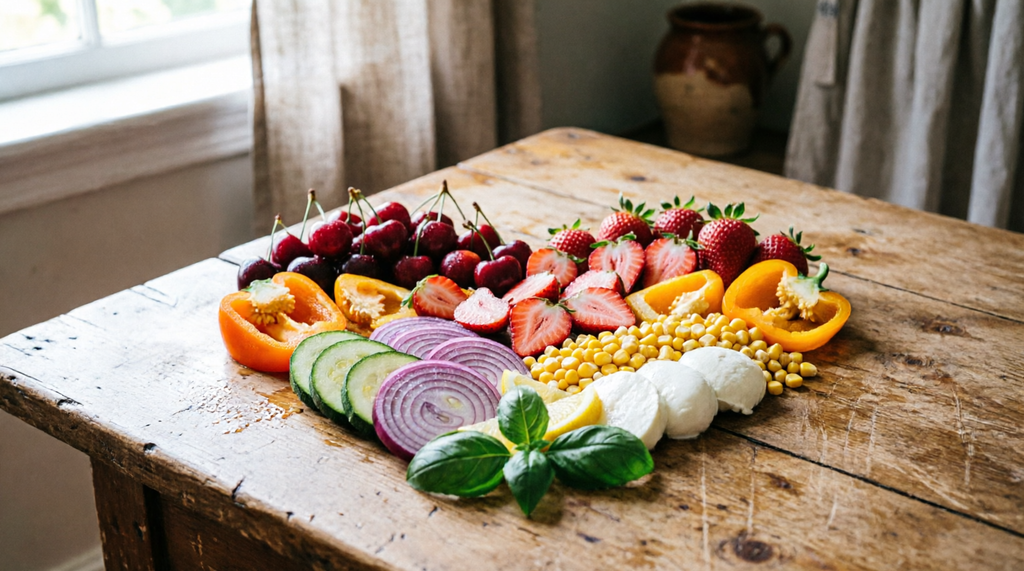
Cooking metaphors are expressions that use cooking, food, ingredients, recipes, heat, or kitchen activities to describe something else. They help people explain abstract ideas through familiar experiences. For example, “let the idea simmer” means to give an idea time to develop, not to literally cook it.
The basic idea is simple: something from the kitchen stands for something outside the kitchen.
For example:
- Ingredient → an important part of something
- Recipe → a plan or set of steps
- Simmer → develop slowly
- Spice things up → make something more exciting
- Cook up a plan → create a plan
- Too many cooks → too many people trying to control one task
- Half-baked idea → poorly developed idea
- On the back burner → temporarily given less attention
- Add fuel to the fire → make a problem worse
Quick Summary
| Cooking word or phrase | Metaphorical meaning | Common context |
|---|---|---|
| Ingredient | Important part | Ideas, success, relationships |
| Recipe | Plan or formula | Success, projects |
| Simmer | Develop slowly | Ideas, emotions |
| Boil over | Become uncontrollable | Anger, conflict |
| Spice things up | Add excitement | Relationships, events |
| Cook up | Create or invent | Plans, stories, schemes |
| Half-baked | Poorly developed | Ideas, plans |
| Back burner | Lower priority | Work, projects |
| Too many cooks | Too much interference | Teams, projects |
| Stir the pot | Cause trouble | Arguments, social situations |
| In the mix | Included | Groups, competition |
| A piece of cake | Very easy | Everyday conversation |
| Food for thought | Something worth thinking about | Writing, discussion |
| Chew over | Think carefully | Decisions |
| Digest | Understand gradually | Information |
| Bitter taste | Unpleasant feeling | Failure, memories |
| Sweet success | Pleasant success | Achievements |
| Sour relationship | Unpleasant relationship | People |
| Fresh idea | New idea | Work, school, writing |
Quick takeaway: Cooking metaphors work because people already understand what cooking feels like. The metaphor simply transfers that familiar experience to a different situation.
Why We Use Cooking Metaphors

We use cooking metaphors because food and cooking are familiar parts of everyday life. Words such as “mix,” “bake,” “simmer,” and “spice” can turn an abstract thought into a clear mental picture. They are useful in conversation, stories, school writing, advertising, social media, and even professional communication.
Cooking metaphors can help you:
- Make an idea easier to understand
- Make writing more memorable
- Describe feelings without using plain labels
- Add humor to conversation
- Explain how something develops
- Describe teamwork and conflict
- Make social media captions more colorful
- Give creative writing stronger images
- Explain complicated processes simply
In Everyday Speech
A friend might say:
“Things have been simmering between them for months.”
The speaker does not mean anyone is cooking. The phrase suggests that tension has been slowly building.
In Writing
A writer might say:
“The small mistake added fuel to the fire.”
That creates a stronger image than simply saying:
“The mistake made the problem worse.”
In School
Students can use metaphors to make essays more vivid:
“The first failure was only an ingredient in her eventual success.”
On Social Media
A caption might say:
“Something good is cooking.”
This can suggest that something exciting is being planned or developed.
At Work
A manager might say:
“We have too many cooks in the kitchen.”
This means too many people are giving directions or interfering with the same project.
Pro tip: A metaphor should make your meaning clearer, not harder. If readers have to stop and decode it, choose a simpler expression.
Main Section: 60+ Cooking Metaphors and Their Meanings
The examples below cover common cooking metaphors, food-based expressions, and creative cooking images. Some are established idioms, while others are creative metaphors that writers can use naturally.
1. A Recipe for Success
Meaning: A combination of actions or conditions that can lead to a good result.
Real explanation: A recipe tells you what ingredients and steps are needed to make a dish. Metaphorically, a “recipe for success” means a useful combination of qualities, choices, or actions.
Sample sentence:
“Hard work, patience, and practice are a recipe for success.”
When to use it: Use it when several factors work together to produce a result.
When NOT to use it: Avoid it when discussing something completely unrelated to causes or contributing factors.
Alternatives:
- Formula for success
- Key to success
- Path to success
Difficulty: Easy
Tone: Neutral
2. Add Spice to Life
Meaning: Make life more interesting or exciting.
Real explanation: Spices change the flavor of food. This metaphor transfers that idea to experiences, routines, relationships, or activities.
Sample sentence:
“Traveling alone added some spice to her life.”
When to use it: Use it for fun, variety, adventure, or change.
When NOT to use it: Avoid it in serious situations such as grief, emergencies, or formal reports.
Alternatives:
- Add excitement
- Make things more interesting
- Break the routine
Difficulty: Easy
Tone: Informal/Neutral
3. Spice Things Up
Meaning: Make a situation more exciting or interesting.
Real explanation: When food needs more flavor, you add spices. In the metaphor, something boring or predictable needs more excitement.
Sample sentence:
“We should spice things up and try something new this weekend.”
When to use it: Use it for social activities, routines, events, and relationships.
When NOT to use it: Avoid it in formal business writing unless the tone is deliberately casual.
Alternatives:
- Make it exciting
- Add some variety
- Liven things up
Difficulty: Easy
Tone: Informal
4. Let It Simmer
Meaning: Give something time to develop before acting.
Real explanation: Food can simmer slowly over low heat. As a metaphor, an idea, emotion, or plan can also develop gradually.
Sample sentence:
“Let the proposal simmer for a few days before we make a decision.”
When to use it: Use it for ideas, plans, feelings, or decisions that need time.
When NOT to use it: Do not use it when immediate action is necessary.
Alternatives:
- Give it time
- Let it develop
- Think it over
Difficulty: Easy
Tone: Neutral
5. Letting Anger Boil Over
Meaning: Allowing anger to become uncontrollable.
Real explanation: Liquid that boils can rise and spill from a pot. The metaphor describes emotions reaching a point where they can no longer be contained.
Sample sentence:
“His anger finally boiled over during the meeting.”
When to use it: Use it for strong emotions, especially anger.
When NOT to use it: Avoid using it as a light joke when someone is experiencing a serious emotional crisis.
Alternatives:
- Lose control
- Explode with anger
- Reach a breaking point
Difficulty: Easy
Tone: Neutral
6. Boiling Point
Meaning: The moment when a difficult situation or emotion becomes unbearable.
Real explanation: Water reaches its boiling point when it becomes hot enough to boil. Metaphorically, a person or situation can reach a similar limit.
Sample sentence:
“Years of frustration finally pushed her to the boiling point.”
When to use it: Use it for rising tension, anger, stress, or conflict.
When NOT to use it: Avoid it when there is no sense of pressure building.
Alternatives:
- Breaking point
- Limit
- Crisis point
Difficulty: Easy
Tone: Neutral
7. Cook Up a Plan
Meaning: Create or invent a plan.
Real explanation: Cooking combines ingredients to create something. “Cooking up” a plan suggests putting different ideas together.
Sample sentence:
“We cooked up a plan to surprise Dad.”
When to use it: Use it for informal planning.
When NOT to use it: Avoid it in very formal documents when “develop” or “create” is more suitable.
Alternatives:
- Come up with a plan
- Develop a plan
- Create a strategy
Difficulty: Easy
Tone: Informal
8. Cook Up an Excuse
Meaning: Invent an excuse, often one that may not be completely honest.
Real explanation: The metaphor compares creating an excuse with preparing a dish.
Sample sentence:
“He cooked up an excuse for missing the deadline.”
When to use it: Use it when someone appears to invent an explanation.
When NOT to use it: Do not use it when the explanation is known to be genuine.
Alternatives:
- Make up an excuse
- Invent an excuse
- Come up with an excuse
Difficulty: Easy
Tone: Informal
9. A Half-Baked Idea
Meaning: An idea that has not been fully developed.
Real explanation: Something that is half-baked has not been cooked enough. The metaphor suggests that an idea is not ready either.
Sample sentence:
“That sounds like a half-baked idea. Let’s work out the details first.”
When to use it: Use it for weak, incomplete plans or ideas.
When NOT to use it: Avoid it if you want to praise someone’s idea.
Alternatives:
- Incomplete idea
- Poorly developed plan
- Unfinished thought
Difficulty: Easy
Tone: Informal
10. Too Many Cooks in the Kitchen
Meaning: Too many people are trying to control or influence the same task.
Real explanation: A kitchen becomes difficult to manage when too many people are cooking at once. The metaphor applies the same idea to teams and projects.
Sample sentence:
“The website project has too many cooks in the kitchen.”
When to use it: Use it when excessive involvement causes confusion.
When NOT to use it: Avoid blaming people this way in sensitive professional situations.
Alternatives:
- Too much interference
- Too many decision-makers
- Too many people involved
Difficulty: Easy
Tone: Informal
11. Stir the Pot
Meaning: Deliberately create trouble, disagreement, or excitement.
Real explanation: Stirring a pot mixes everything together. Metaphorically, a person can “stir the pot” by bringing up controversial subjects or creating conflict.
Sample sentence:
“Jake loves to stir the pot during family debates.”
When to use it: Use it for someone who enjoys causing reactions.
When NOT to use it: Avoid it when describing serious conflict without explaining the context.
Alternatives:
- Cause trouble
- Provoke people
- Create tension
Difficulty: Easy
Tone: Informal
12. Put Something on the Back Burner
Meaning: Give something less attention for now.
Real explanation: A pot on the back burner is usually farther from immediate attention than one on the front burner. The metaphor means delaying or lowering the priority of something.
Sample sentence:
“We’ve put the expansion project on the back burner.”
When to use it: Use it for projects, plans, goals, or tasks that are delayed.
When NOT to use it: Avoid it if something has been permanently canceled.
Alternatives:
- Postpone
- Put on hold
- Lower the priority
Difficulty: Easy
Tone: Neutral
13. On the Front Burner
Meaning: A matter receiving immediate attention.
Real explanation: The front burner is easy to reach and usually receives active cooking attention. The metaphor means something is currently important.
Sample sentence:
“Customer complaints are on the front burner this week.”
When to use it: Use it for urgent projects or priorities.
When NOT to use it: Avoid it for something that is not receiving active attention.
Alternatives:
- Top priority
- Main focus
- Immediate concern
Difficulty: Easy
Tone: Neutral
14. Food for Thought
Meaning: An idea or piece of information worth thinking about.
Real explanation: Food nourishes the body. “Food for thought” suggests that ideas nourish the mind.
Sample sentence:
“Her question gave me some food for thought.”
When to use it: Use it after an interesting idea, question, or observation.
When NOT to use it: Avoid it when you simply want to state a basic fact.
Alternatives:
- Something to consider
- Something to think about
- A thought-provoking idea
Difficulty: Easy
Tone: Neutral
15. Chew Something Over
Meaning: Think carefully about something.
Real explanation: Chewing food takes time before swallowing it. The metaphor compares this slow process with carefully considering an idea.
Sample sentence:
“I need a day to chew over your offer.”
When to use it: Use it when someone needs time to make a decision.
When NOT to use it: Avoid it when an immediate answer is expected.
Alternatives:
- Think it over
- Consider it carefully
- Reflect on it
Difficulty: Easy
Tone: Informal/Neutral
16. Digest Information
Meaning: Take time to understand and process information.
Real explanation: The body digests food gradually. The metaphor describes the mind processing new information in a similar way.
Sample sentence:
“Give the students some time to digest the new material.”
When to use it: Use it in education, presentations, meetings, and writing.
When NOT to use it: Avoid it if you mean simply “hear” or “receive” information.
Alternatives:
- Process information
- Understand
- Take in the information
Difficulty: Easy
Tone: Neutral
17. A Bitter Taste
Meaning: A lasting unpleasant feeling after an experience.
Real explanation: Bitter food has an unpleasant flavor. A painful event can leave a similar emotional impression.
Sample sentence:
“The unfair decision left a bitter taste.”
When to use it: Use it for disappointment, resentment, or regret.
When NOT to use it: Avoid it when the experience was clearly positive.
Alternatives:
- Bad feeling
- Lasting disappointment
- Resentment
Difficulty: Easy
Tone: Neutral
18. A Sweet Victory
Meaning: A victory that feels especially satisfying.
Real explanation: Sweetness suggests pleasure. A difficult win can therefore be described as “sweet.”
Sample sentence:
“Beating our strongest rival was a sweet victory.”
When to use it: Use it for satisfying achievements.
When NOT to use it: Avoid it in very formal reports unless the tone allows figurative language.
Alternatives:
- Satisfying victory
- Rewarding win
- Great achievement
Difficulty: Easy
Tone: Neutral
19. A Sour Relationship
Meaning: A relationship that has become unpleasant or unfriendly.
Real explanation: Sour is an unpleasant taste. The metaphor describes a relationship that no longer feels positive.
Sample sentence:
“Their friendship turned sour after the argument.”
When to use it: Use it for relationships that have deteriorated.
When NOT to use it: Avoid it when discussing a neutral disagreement.
Alternatives:
- Strained relationship
- Difficult relationship
- Tense relationship
Difficulty: Easy
Tone: Neutral
20. A Fresh Idea
Meaning: A new, original, or different idea.
Real explanation: Fresh food is new and appealing. A fresh idea is similarly new or refreshing.
Sample sentence:
“We need a fresh idea for the campaign.”
When to use it: Use it in almost any creative or problem-solving context.
When NOT to use it: Avoid claiming an idea is fresh if it has already been widely used.
Alternatives:
- New idea
- Original idea
- Innovative approach
Difficulty: Very easy
Tone: Neutral
21. A Recipe for Disaster
Meaning: A combination of conditions likely to cause a bad result.
Real explanation: A recipe normally produces food. A “recipe for disaster” humorously suggests that certain ingredients are likely to produce trouble instead.
Sample sentence:
“Poor planning and no backup were a recipe for disaster.”
When to use it: Use it to warn about risky combinations.
When NOT to use it: Avoid it when the outcome is already known and no prediction is involved.
Alternatives:
- Disaster waiting to happen
- Dangerous combination
- Trouble waiting to happen
Difficulty: Easy
Tone: Neutral
22. Too Many Ingredients
Meaning: Too many elements are being added to something.
Real explanation: A recipe can become confusing if it contains unnecessary ingredients. The metaphor works for projects, stories, plans, and ideas.
Sample sentence:
“The report has too many ingredients and needs a clearer focus.”
When to use it: Use it creatively when discussing complexity.
When NOT to use it: Avoid it when a literal cooking context would cause confusion.
Alternatives:
- Too many elements
- Too complicated
- Overloaded
Difficulty: Intermediate
Tone: Neutral
23. The Secret Ingredient
Meaning: A special factor that helps make something successful.
Real explanation: A secret ingredient gives a dish a distinctive quality. Metaphorically, it can describe an unknown or less obvious factor behind success.
Sample sentence:
“Patience is the secret ingredient in good teaching.”
When to use it: Use it when one special factor stands out.
When NOT to use it: Avoid suggesting there is one magical factor when success clearly depends on many things.
Alternatives:
- Key factor
- Special quality
- Hidden advantage
Difficulty: Easy
Tone: Neutral
24. Mix Things Together
Meaning: Combine different ideas, people, or elements.
Real explanation: Mixing combines ingredients. The metaphor transfers this action to abstract things.
Sample sentence:
“The course mixes theory and practical work together.”
When to use it: Use it when describing combinations.
When NOT to use it: Avoid it if the elements should remain separate.
Alternatives:
- Combine
- Blend
- Bring together
Difficulty: Very easy
Tone: Neutral
25. Blend Ideas
Meaning: Combine different ideas so they work together smoothly.
Real explanation: Blending creates a unified mixture. The metaphor works especially well when two styles or concepts are combined.
Sample sentence:
“The designer blended modern and traditional ideas.”
When to use it: Use it for creative work, design, writing, education, and business.
When NOT to use it: Avoid it if the ideas remain clearly separate.
Alternatives:
- Combine ideas
- Merge ideas
- Integrate ideas
Difficulty: Easy
Tone: Neutral
26. Add Fuel to the Fire
Meaning: Make an existing problem, argument, or conflict worse.
Real explanation: Fuel makes a fire burn more strongly. Metaphorically, an action can increase an already difficult situation.
Sample sentence:
“His angry reply only added fuel to the fire.”
When to use it: Use it for arguments, conflict, rumors, and problems.
When NOT to use it: Do not use it when an action actually solves the problem.
Alternatives:
- Make things worse
- Escalate the problem
- Increase the tension
Difficulty: Easy
Tone: Neutral
27. Cooked Up
Meaning: Invented or created, sometimes dishonestly.
Real explanation: “Cooked up” can describe an invented story, plan, excuse, or scheme.
Sample sentence:
“They cooked up a strange story to explain what happened.”
When to use it: Use it for informal descriptions of invented things.
When NOT to use it: Avoid it if you want to clearly state that something is factual.
Alternatives:
- Invented
- Made up
- Created
Difficulty: Easy
Tone: Informal
28. Half-Cooked
Meaning: Incomplete or insufficiently developed.
Real explanation: This creative variation works like “half-baked.” It suggests that something has not reached a finished state.
Sample sentence:
“The proposal still feels half-cooked.”
When to use it: Use it creatively for incomplete plans or ideas.
When NOT to use it: Avoid it in highly formal writing.
Alternatives:
- Incomplete
- Unfinished
- Underdeveloped
Difficulty: Intermediate
Tone: Informal
29. A Well-Cooked Plan
Meaning: A carefully prepared plan.
Real explanation: This is a creative metaphor rather than a fixed idiom. It compares careful planning with careful preparation of food.
Sample sentence:
“They arrived with a well-cooked plan for the event.”
When to use it: Use it in creative or conversational writing.
When NOT to use it: Avoid it in formal reports where “well-developed plan” is clearer.
Alternatives:
- Well-developed plan
- Carefully prepared plan
- Solid strategy
Difficulty: Intermediate
Tone: Creative/Informal
30. Cooked to Perfection
Meaning: Developed or completed extremely well.
Real explanation: Food cooked perfectly has reached the desired state. The metaphor can describe a plan, performance, idea, or project that has been refined.
Sample sentence:
“The final presentation was cooked to perfection.”
When to use it: Use it for playful praise.
When NOT to use it: Avoid it in serious professional writing.
Alternatives:
- Perfectly prepared
- Highly polished
- Finished beautifully
Difficulty: Easy
Tone: Informal/Creative
31. Simmering Tension
Meaning: Tension that is slowly building but has not yet exploded.
Real explanation: Food can simmer quietly beneath the surface. The metaphor describes conflict that remains present even when people appear calm.
Sample sentence:
“There was simmering tension between the two teams.”
When to use it: Use it for hidden or slowly growing conflict.
When NOT to use it: Avoid it if the conflict is already openly explosive.
Alternatives:
- Growing tension
- Underlying conflict
- Rising pressure
Difficulty: Easy
Tone: Neutral
32. Simmering Anger
Meaning: Anger that remains strong beneath a calm surface.
Real explanation: Simmering suggests heat that has not reached a full boil. It creates the image of emotion being held inside.
Sample sentence:
“Her simmering anger was obvious from her short replies.”
When to use it: Use it when anger is controlled but still present.
When NOT to use it: Avoid it if the person has already openly lost control.
Alternatives:
- Suppressed anger
- Growing anger
- Hidden frustration
Difficulty: Easy
Tone: Neutral
33. Stirring Up Trouble
Meaning: Creating or increasing problems.
Real explanation: Stirring changes the contents of a pot. Metaphorically, someone who “stirs up trouble” causes a peaceful situation to become unsettled.
Sample sentence:
“He keeps stirring up trouble in the group chat.”
When to use it: Use it for people who create unnecessary conflict.
When NOT to use it: Avoid it when someone is simply reporting a problem.
Alternatives:
- Cause problems
- Create conflict
- Make trouble
Difficulty: Easy
Tone: Informal
34. Stirring Up Memories
Meaning: Causing old memories or feelings to return.
Real explanation: Stirring moves things that are sitting beneath the surface. The metaphor works well for memories, emotions, and old experiences.
Sample sentence:
“Looking through those photographs stirred up old memories.”
When to use it: Use it in personal writing and conversation.
When NOT to use it: Avoid it if nothing emotional is involved.
Alternatives:
- Bring back memories
- Awaken memories
- Recall the past
Difficulty: Easy
Tone: Neutral
35. In the Mix
Meaning: Included among a group of people or possibilities.
Real explanation: Ingredients in a mixture become part of the whole. “In the mix” suggests being included in a situation.
Sample sentence:
“She is one of the strongest candidates in the mix.”
When to use it: Use it for competitions, choices, groups, and possibilities.
When NOT to use it: Avoid it when someone has definitely been excluded.
Alternatives:
- Included
- Among the options
- Part of the group
Difficulty: Easy
Tone: Informal/Neutral
36. Throw Something Into the Mix
Meaning: Add another element to an existing situation.
Real explanation: A new ingredient changes a mixture. The same happens when a new factor changes a situation.
Sample sentence:
“Then they threw a tight deadline into the mix.”
When to use it: Use it when a new factor changes a situation.
When NOT to use it: Avoid it if the new factor has no effect.
Alternatives:
- Add to the situation
- Introduce another factor
- Bring in another element
Difficulty: Easy
Tone: Informal/Neutral
37. A Dash of Humor
Meaning: A small amount of humor.
Real explanation: A dash is a small amount of an ingredient. The metaphor makes the amount feel light and controlled.
Sample sentence:
“The article needs a dash of humor.”
When to use it: Use it for small amounts of qualities or features.
When NOT to use it: Avoid it when humor is the main focus.
Alternatives:
- A touch of humor
- A little humor
- A hint of humor
Difficulty: Easy
Tone: Neutral
38. A Pinch of Patience
Meaning: A small amount of patience.
Real explanation: A pinch is a small amount of an ingredient, usually taken between the fingers. The metaphor makes an abstract quality feel measurable.
Sample sentence:
“The project only needs a pinch of patience.”
When to use it: Use it playfully.
When NOT to use it: Avoid it when you need very precise professional language.
Alternatives:
- A little patience
- Some patience
- A touch of patience
Difficulty: Easy
Tone: Informal/Creative
39. Add a Little Flavor
Meaning: Add personality, variety, or interest.
Real explanation: Flavor changes how food tastes. Metaphorically, personality or creative details can give something more character.
Sample sentence:
“Her jokes add a little flavor to the presentation.”
When to use it: Use it for creative work, conversation, presentations, and social situations.
When NOT to use it: Avoid it when describing something that should remain strictly factual.
Alternatives:
- Add personality
- Add variety
- Make it more interesting
Difficulty: Easy
Tone: Informal/Neutral
40. Full of Flavor
Meaning: Rich, interesting, or full of distinctive qualities.
Real explanation: Flavor makes food interesting. The metaphor can describe writing, stories, personalities, or experiences with strong character.
Sample sentence:
“Her stories are full of flavor and personality.”
When to use it: Use it for creative descriptions.
When NOT to use it: Avoid it in technical writing unless used intentionally.
Alternatives:
- Rich
- Colorful
- Full of character
Difficulty: Easy
Tone: Creative
41. A Bland Idea
Meaning: An idea that is dull, ordinary, or lacking excitement.
Real explanation: Bland food lacks strong flavor. A bland idea similarly lacks originality or energy.
Sample sentence:
“The concept is useful, but the presentation feels bland.”
When to use it: Use it when giving creative criticism.
When NOT to use it: Avoid it when you need diplomatic feedback.
Alternatives:
- Dull idea
- Unoriginal idea
- Unexciting concept
Difficulty: Easy
Tone: Informal/Neutral
42. A Raw Idea
Meaning: An idea that is new and has not been fully developed.
Real explanation: Raw food has not yet been cooked or prepared. A raw idea needs more thought and development.
Sample sentence:
“It’s still a raw idea, but there may be something useful in it.”
When to use it: Use it for early-stage thoughts.
When NOT to use it: Avoid it when the idea is already polished.
Alternatives:
- Early idea
- Rough concept
- Initial thought
Difficulty: Easy
Tone: Neutral
43. A Well-Seasoned Professional
Meaning: An experienced person.
Real explanation: Food becomes more developed in flavor through seasoning. A “seasoned” professional has gained experience over time.
Sample sentence:
“She is a seasoned editor with years of experience.”
When to use it: Use it to describe experienced adults or professionals.
When NOT to use it: Avoid it when the person has little experience.
Alternatives:
- Experienced professional
- Veteran
- Skilled expert
Difficulty: Easy
Tone: Neutral
44. Seasoned Advice
Meaning: Advice based on experience and practical knowledge.
Real explanation: “Seasoned” suggests that experience has added depth, much like seasoning adds flavor.
Sample sentence:
“His seasoned advice helped us avoid several mistakes.”
When to use it: Use it when experience matters.
When NOT to use it: Avoid it if the person is giving an untested opinion.
Alternatives:
- Experienced advice
- Practical guidance
- Expert advice
Difficulty: Easy
Tone: Neutral
45. Food for the Soul
Meaning: Something that gives deep emotional comfort or pleasure.
Real explanation: Food supports the body. This metaphor suggests that music, art, friendship, nature, or other experiences can nourish the spirit.
Sample sentence:
“Her grandmother’s stories were food for the soul.”
When to use it: Use it in emotional or creative writing.
When NOT to use it: Avoid it in highly technical communication.
Alternatives:
- Emotional nourishment
- Soulful comfort
- Deep inspiration
Difficulty: Easy
Tone: Creative
46. A Feast of Ideas
Meaning: A large and rich collection of ideas.
Real explanation: A feast offers plenty of food. A “feast of ideas” suggests an equally rich supply of thoughts.
Sample sentence:
“The conference was a feast of ideas.”
When to use it: Use it for books, talks, conferences, discussions, and creative work.
When NOT to use it: Avoid it when there are only one or two simple ideas.
Alternatives:
- Wealth of ideas
- Rich collection of ideas
- Abundance of ideas
Difficulty: Intermediate
Tone: Creative
47. Serve Up an Idea
Meaning: Present or offer an idea.
Real explanation: Food is served to people. The metaphor treats an idea as something prepared and presented to an audience.
Sample sentence:
“The speaker served up a simple solution to a difficult problem.”
When to use it: Use it in lively writing.
When NOT to use it: Avoid it when a neutral phrase like “present” is more appropriate.
Alternatives:
- Present an idea
- Offer an idea
- Put forward an idea
Difficulty: Intermediate
Tone: Creative/Informal
48. Serve Up a Solution
Meaning: Present a solution for others to consider or use.
Real explanation: The metaphor makes a solution feel like something prepared and placed in front of people.
Sample sentence:
“The team served up a practical solution.”
When to use it: Use it for informal articles, speeches, or creative business writing.
When NOT to use it: Avoid it in highly formal technical reports.
Alternatives:
- Provide a solution
- Present a solution
- Offer a solution
Difficulty: Easy
Tone: Informal/Creative
49. Bite-Sized Information
Meaning: Small, easy-to-understand pieces of information.
Real explanation: A bite-sized piece of food is small enough to eat easily. The metaphor describes information that has been broken into manageable parts.
Sample sentence:
“The course gives students bite-sized lessons.”
When to use it: Use it for education, websites, videos, and online content.
When NOT to use it: Avoid it when discussing highly detailed information that cannot be simplified.
Alternatives:
- Short lessons
- Small pieces of information
- Easy-to-digest content
Difficulty: Easy
Tone: Informal/Neutral
50. Easy as Pie
Meaning: Very easy.
Real explanation: This is a playful food-based comparison used to emphasize simplicity.
Sample sentence:
“Once you know the steps, the process is easy as pie.”
When to use it: Use it in casual speech.
When NOT to use it: Avoid it in formal academic writing.
Alternatives:
- Very easy
- Simple
- A piece of cake
Difficulty: Very easy
Tone: Informal
51. A Piece of Cake
Meaning: Something very easy to do.
Real explanation: The phrase uses cake as an image of something enjoyable and easy. It is one of the most common food-related idioms in American English.
Sample sentence:
“The test was a piece of cake.”
When to use it: Use it in casual conversation.
When NOT to use it: Avoid it in formal reports or academic essays.
Alternatives:
- Very easy
- Simple
- No problem
Difficulty: Very easy
Tone: Informal
52. Have Your Cake and Eat It Too
Meaning: Want two benefits that normally cannot both be kept.
Real explanation: The image is simple: if you eat the cake, you no longer possess the same cake. The metaphor describes wanting incompatible advantages.
Sample sentence:
“You can’t have your cake and eat it too.”
When to use it: Use it when someone wants mutually conflicting benefits.
When NOT to use it: Avoid it when both benefits are realistically possible.
Alternatives:
- You can’t have both
- You can’t have it both ways
- You must choose
Difficulty: Easy
Tone: Informal
53. Bring Home the Bacon
Meaning: Earn money or provide financially for a household.
Real explanation: Bacon represents food and, by extension, the money needed to provide for daily life.
Sample sentence:
“She works hard to bring home the bacon.”
When to use it: Use it in casual or humorous contexts.
When NOT to use it: Avoid it in formal financial writing.
Alternatives:
- Earn a living
- Support the family
- Make money
Difficulty: Easy
Tone: Informal
54. A Tough Nut to Crack
Meaning: A difficult person, problem, or challenge.
Real explanation: A hard nut is difficult to open. The metaphor compares that physical difficulty with solving a difficult problem or understanding a difficult person.
Sample sentence:
“This puzzle is a tough nut to crack.”
When to use it: Use it for challenging problems or people.
When NOT to use it: Avoid it when the situation is simple.
Alternatives:
- Difficult problem
- Hard challenge
- Difficult person to understand
Difficulty: Easy
Tone: Informal
55. In a Nutshell
Meaning: In a very short or simple form.
Real explanation: A nutshell is small. The metaphor suggests putting a large idea into a small space.
Sample sentence:
“In a nutshell, we need more time.”
When to use it: Use it when giving a short summary.
When NOT to use it: Avoid it when a detailed explanation is required.
Alternatives:
- Briefly
- In short
- To summarize
Difficulty: Very easy
Tone: Neutral/Informal
56. Sweeten the Deal
Meaning: Make an offer more attractive.
Real explanation: Adding sweetness makes food more appealing. Metaphorically, an extra benefit can make an offer more attractive.
Sample sentence:
“They sweetened the deal by offering free delivery.”
When to use it: Use it in negotiations, sales, and everyday conversation.
When NOT to use it: Avoid it if no additional benefit has been offered.
Alternatives:
- Improve the offer
- Add an incentive
- Make the offer more attractive
Difficulty: Easy
Tone: Neutral
57. Leave a Bad Taste in Someone’s Mouth
Meaning: Cause someone to have a negative feeling about an experience.
Real explanation: An unpleasant taste can remain after eating. The metaphor describes a similar emotional reaction.
Sample sentence:
“The unfair treatment left a bad taste in my mouth.”
When to use it: Use it for disappointment, distrust, or discomfort.
When NOT to use it: Avoid it when someone feels completely positive.
Alternatives:
- Leave a bad impression
- Create a negative feeling
- Cause disappointment
Difficulty: Easy
Tone: Neutral
58. Take With a Grain of Salt
Meaning: Do not accept something as completely true.
Real explanation: The expression advises people to maintain some doubt. It is often used when information may be exaggerated, unreliable, or opinion-based.
Sample sentence:
“Take online rumors with a grain of salt.”
When to use it: Use it when information needs caution or verification.
When NOT to use it: Avoid it when discussing verified facts that do not need skepticism.
Alternatives:
- Be skeptical
- Don’t take it literally
- Check the information
Difficulty: Easy
Tone: Neutral
59. A Hard Pill to Swallow
Meaning: A difficult fact or situation to accept.
Real explanation: Medicine can be unpleasant to swallow. The metaphor compares that physical difficulty with emotional or mental difficulty.
Sample sentence:
“Losing the competition was a hard pill to swallow.”
When to use it: Use it for disappointment, failure, or difficult truths.
When NOT to use it: Avoid it when the information is easy to accept.
Alternatives:
- Difficult truth
- Hard fact to accept
- Painful realization
Difficulty: Easy
Tone: Neutral
60. Eat Your Words
Meaning: Admit that something you said was wrong.
Real explanation: The metaphor imagines someone literally eating their own words. It often carries a playful or challenging tone.
Sample sentence:
“You said we would lose, but now you have to eat your words.”
When to use it: Use it in casual conversation.
When NOT to use it: Avoid it in formal apologies or serious professional situations.
Alternatives:
- Admit you were wrong
- Take back what you said
- Admit your mistake
Difficulty: Easy
Tone: Informal
61. Chew the Fat
Meaning: Chat casually for a long time.
Real explanation: This old food-related expression means to talk without a strong practical purpose. It is more common in informal English.
Sample sentence:
“We sat around after dinner and chewed the fat.”
When to use it: Use it for relaxed conversations.
When NOT to use it: Avoid it in formal writing and when speaking to English learners who may not know the phrase.
Alternatives:
- Chat
- Talk
- Catch up
Difficulty: Intermediate
Tone: Informal
62. A Lot on Your Plate
Meaning: Having many responsibilities or problems to deal with.
Real explanation: A plate can hold several foods at once. The metaphor compares those foods with tasks, duties, and pressures.
Sample sentence:
“I have a lot on my plate this week.”
When to use it: Use it when someone is busy or under pressure.
When NOT to use it: Avoid it if the person has very few responsibilities.
Alternatives:
- Very busy
- A lot to handle
- Many responsibilities
Difficulty: Very easy
Tone: Informal/Neutral
63. Take Something Off Your Plate
Meaning: Remove a responsibility from someone.
Real explanation: If something is on your plate, you metaphorically have to deal with it. Taking it off means reducing the person’s workload.
Sample sentence:
“I can handle the emails and take that task off your plate.”
When to use it: Use it at work or when helping someone.
When NOT to use it: Avoid it if you are not actually offering to handle the responsibility.
Alternatives:
- Reduce your workload
- Handle the task
- Take care of it
Difficulty: Easy
Tone: Informal/Neutral
64. Have a Lot to Chew On
Meaning: Have a lot to think about.
Real explanation: Chewing takes time. The metaphor suggests mentally working through several ideas or questions.
Sample sentence:
“That lecture gave me a lot to chew on.”
When to use it: Use it after an interesting discussion or experience.
When NOT to use it: Avoid it when there is nothing complex to consider.
Alternatives:
- A lot to think about
- Much to consider
- Plenty to reflect on
Difficulty: Easy
Tone: Informal
65. Serve Something Up Hot
Meaning: Present something in a fresh, energetic, or timely way.
Real explanation: Hot food is served immediately. As a creative metaphor, new information or entertainment can be “served up hot.”
Sample sentence:
“The website serves up hot news every morning.”
When to use it: Use it in creative, media, marketing, or informal writing.
When NOT to use it: Avoid it in formal academic prose.
Alternatives:
- Present fresh information
- Deliver new content
- Provide the latest information
Difficulty: Intermediate
Tone: Creative/Informal
66. Cook on Low Heat
Meaning: Develop something slowly and patiently.
Real explanation: Cooking on low heat takes longer and can prevent something from burning. As a metaphor, it suggests slow, controlled progress.
Sample sentence:
“We’re cooking the project on low heat until we have enough information.”
When to use it: Use it as a creative metaphor for slow development.
When NOT to use it: Avoid it when describing a standard process in formal writing.
Alternatives:
- Develop slowly
- Take a gradual approach
- Move carefully
Difficulty: Intermediate
Tone: Creative
67. Turn Up the Heat
Meaning: Increase pressure, intensity, competition, or urgency.
Real explanation: Increasing heat makes cooking more intense. The metaphor applies that idea to negotiations, competition, investigations, and conflict.
Sample sentence:
“The company turned up the heat on its competitors.”
When to use it: Use it for increasing pressure or intensity.
When NOT to use it: Avoid it when the situation is becoming calmer.
Alternatives:
- Increase pressure
- Raise the stakes
- Intensify the effort
Difficulty: Easy
Tone: Neutral
68. Keep the Pot Boiling
Meaning: Keep activity, discussion, or progress going.
Real explanation: A boiling pot remains active. The metaphor can describe keeping a project, campaign, or conversation moving.
Sample sentence:
“We need new ideas to keep the project boiling.”
When to use it: Mostly use it creatively.
When NOT to use it: Avoid it as a substitute for established expressions when clarity matters.
Alternatives:
- Keep things moving
- Maintain momentum
- Keep the activity going
Difficulty: Intermediate
Tone: Creative
69. Cook the Books
Meaning: Falsify financial records.
Real explanation: This is an established idiom, not a literal cooking phrase. It means deliberately changing financial information to make a company or person’s finances look better or different from reality.
Sample sentence:
“The accountant was accused of cooking the books.”
When to use it: Use it only when discussing suspected or confirmed financial manipulation.
When NOT to use it: Never use it casually to accuse someone of a crime without evidence.
Alternatives:
- Falsify records
- Manipulate accounts
- Alter financial records
Difficulty: Intermediate
Tone: Informal/Neutral
70. A Melting Pot
Meaning: A place or group where different cultures, ideas, or people come together.
Real explanation: Different ingredients can melt together into one mixture. The metaphor describes a society or environment containing different cultural or social elements.
Sample sentence:
“The city is a melting pot of languages and traditions.”
When to use it: Use it when discussing cultural diversity and mixture.
When NOT to use it: Avoid presenting it as the only model for cultural identity; some contexts are better described as a “mosaic” or “multicultural society.”
Alternatives:
- Cultural mix
- Diverse community
- Multicultural society
Difficulty: Easy
Tone: Neutral
Quick Reference Table
Here is a fast reference for choosing the right cooking metaphor.
| # | Metaphor | Main meaning | Best use | Tone |
|---|---|---|---|---|
| 1 | Recipe for success | Factors leading to success | Advice | Neutral |
| 2 | Add spice to life | Add excitement | Life | Informal |
| 3 | Spice things up | Make something exciting | Social situations | Informal |
| 4 | Let it simmer | Give time to develop | Ideas | Neutral |
| 5 | Boil over | Lose emotional control | Anger | Neutral |
| 6 | Boiling point | Breaking point | Conflict | Neutral |
| 7 | Cook up a plan | Create a plan | Planning | Informal |
| 8 | Cook up an excuse | Invent an excuse | Conversation | Informal |
| 9 | Half-baked idea | Poorly developed idea | Ideas | Informal |
| 10 | Too many cooks | Too much interference | Teamwork | Informal |
| 11 | Stir the pot | Cause trouble | Conflict | Informal |
| 12 | Back burner | Lower priority | Work | Neutral |
| 13 | Front burner | Top priority | Work | Neutral |
| 14 | Food for thought | Something to consider | Discussion | Neutral |
| 15 | Chew over | Think carefully | Decisions | Informal |
| 16 | Digest information | Process information | Education | Neutral |
| 17 | Bitter taste | Lasting negative feeling | Emotions | Neutral |
| 18 | Sweet victory | Satisfying win | Achievement | Neutral |
| 19 | Sour relationship | Unpleasant relationship | Relationships | Neutral |
| 20 | Fresh idea | New idea | Creativity | Neutral |
| 21 | Recipe for disaster | Likely bad combination | Warning | Neutral |
| 22 | Too many ingredients | Too many elements | Projects | Creative |
| 23 | Secret ingredient | Special factor | Success | Neutral |
| 24 | Mix things together | Combine | Ideas | Neutral |
| 25 | Blend ideas | Combine smoothly | Creativity | Neutral |
| 26 | Add fuel to the fire | Make worse | Conflict | Neutral |
| 27 | Cooked up | Invented | Stories/plans | Informal |
| 28 | Half-cooked | Incomplete | Ideas | Informal |
| 29 | Well-cooked plan | Carefully developed plan | Creative writing | Creative |
| 30 | Cooked to perfection | Done very well | Praise | Creative |
| 31 | Simmering tension | Hidden growing conflict | Conflict | Neutral |
| 32 | Simmering anger | Controlled anger | Emotions | Neutral |
| 33 | Stirring up trouble | Create problems | Social situations | Informal |
| 34 | Stirring up memories | Bring back memories | Personal writing | Neutral |
| 35 | In the mix | Included | Groups | Informal |
| 36 | Throw into the mix | Add a factor | Situations | Informal |
| 37 | Dash of humor | Small amount | Writing | Creative |
| 38 | Pinch of patience | Small amount | Advice | Creative |
| 39 | Add flavor | Add personality | Writing | Creative |
| 40 | Full of flavor | Rich and interesting | Writing | Creative |
| 41 | Bland idea | Dull idea | Criticism | Informal |
| 42 | Raw idea | Undeveloped idea | Brainstorming | Neutral |
| 43 | Seasoned professional | Experienced person | Work | Neutral |
| 44 | Seasoned advice | Experienced advice | Work | Neutral |
| 45 | Food for the soul | Emotional nourishment | Art/life | Creative |
| 46 | Feast of ideas | Many rich ideas | Events/writing | Creative |
| 47 | Serve up an idea | Present an idea | Writing | Creative |
| 48 | Serve up a solution | Present a solution | Work | Creative |
| 49 | Bite-sized information | Small easy pieces | Education | Neutral |
| 50 | Easy as pie | Very easy | Conversation | Informal |
| 51 | Piece of cake | Very easy | Conversation | Informal |
| 52 | Have your cake and eat it | Want conflicting benefits | Advice | Informal |
| 53 | Bring home the bacon | Earn money | Family/work | Informal |
| 54 | Tough nut to crack | Difficult problem | Problems | Informal |
| 55 | In a nutshell | Briefly | Summaries | Neutral |
| 56 | Sweeten the deal | Improve an offer | Negotiation | Neutral |
| 57 | Bad taste in your mouth | Negative feeling | Experiences | Neutral |
| 58 | Grain of salt | Be skeptical | Information | Neutral |
| 59 | Hard pill to swallow | Difficult truth | Emotions | Neutral |
| 60 | Eat your words | Admit you’re wrong | Conversation | Informal |
| 61 | Chew the fat | Chat casually | Friends | Informal |
| 62 | A lot on your plate | Many responsibilities | Work/life | Informal |
| 63 | Take off your plate | Remove a responsibility | Work | Informal |
| 64 | A lot to chew on | Much to consider | Ideas | Informal |
| 65 | Serve it up hot | Present something fresh | Media | Creative |
| 66 | Cook on low heat | Develop slowly | Creative writing | Creative |
| 67 | Turn up the heat | Increase pressure | Competition | Neutral |
| 68 | Keep the pot boiling | Maintain activity | Creative use | Creative |
| 69 | Cook the books | Falsify accounts | Finance | Informal |
| 70 | Melting pot | Cultural mixture | Society | Neutral |
Real-Life Conversations
Cooking metaphors sound best when they fit the situation naturally. Friends, coworkers, students, family members, and writers use different expressions depending on the tone. The examples below show how the same cooking language can describe planning, pressure, relationships, work, and decisions without sounding forced.
Conversation 1: Friends
Maya: Are you still thinking about starting that photography page?
Liam: Yeah. I have a few ideas, but they’re pretty raw.
Maya: That’s okay. Let them simmer for a while.
Liam: I might add some travel photos too.
Maya: Good idea. That could add some flavor.
Liam: See? You’re already cooking up the plan with me.
Maya: Hey, I don’t want to be one of too many cooks.
🎯 Lesson: Cooking metaphors can make casual conversations playful and natural.
Conversation 2: Office
Jordan: Why hasn’t the new campaign started?
Priya: Marketing wants one thing, sales wants another, and management keeps changing the plan.
Jordan: Sounds like too many cooks in the kitchen.
Priya: Exactly.
Jordan: What’s the priority now?
Priya: Customer retention is on the front burner. The new product launch is on the back burner.
Jordan: That makes sense.
🎯 Lesson: Kitchen metaphors are common in informal workplace conversations.
Conversation 3: Student and Teacher
Student: I think my essay is finished.
Teacher: The main idea is good, but it still feels a little half-baked.
Student: What should I change?
Teacher: Add stronger examples and explain your main point more clearly.
Student: So the idea is okay, but it needs more time?
Teacher: Exactly. Let it simmer before you submit the final version.
🎯 Lesson: Cooking metaphors can explain the difference between a good idea and a fully developed one.
Conversation 4: Family
Mom: Are you coming to dinner?
Sam: I have a lot on my plate tonight.
Mom: Homework?
Sam: Homework, emails, and a project.
Mom: Give me one of those tasks. I’ll take it off your plate.
Sam: Really? Thanks. That helps a lot.
🎯 Lesson: “A lot on my plate” and “take it off your plate” are useful everyday expressions.
Conversation 5: Social Situation
Alex: Did you hear what happened between Nina and Chris?
Taylor: No. What happened?
Alex: Someone brought up their old argument.
Taylor: That probably stirred the pot.
Alex: Definitely. Now everyone is taking sides.
Taylor: Sounds like someone added fuel to the fire.
🎯 Lesson: “Stir the pot” and “add fuel to the fire” both describe conflict, but the first focuses on causing trouble while the second focuses on making an existing problem worse.
Everyday Usage
Cooking metaphors appear in ordinary conversation, creative writing, books, movies, social media, emails, and schoolwork. Common idioms such as “piece of cake” can sound completely natural in speech, while more creative phrases such as “a feast of ideas” usually work better in writing.
Conversation
Use simple expressions:
- “That test was a piece of cake.”
- “I have a lot on my plate.”
- “Let me chew it over.”
- “Don’t stir the pot.”
- “We need to spice things up.”
Writing
Metaphors can make descriptions stronger:
“Her anger had been simmering for weeks.”
This is more vivid than:
“She had been angry for weeks.”
Books
Fiction writers often use cooking images to describe:
- Emotional tension
- Family life
- Relationships
- Memory
- Change
- Conflict
- Growth
Movies and Television
Characters often use short food-based idioms because they sound natural in dialogue:
“Piece of cake.”
“You can’t have your cake and eat it too.”
“Take it with a grain of salt.”
Poetry
Poetry allows more freedom:
“His memories simmered beneath the quiet afternoon.”
This is a creative metaphor, not a fixed idiom.
Emails
Use familiar metaphors carefully.
A casual workplace email might say:
“We have a lot on our plate this week.”
But a formal report may be better with:
“The team has several competing priorities this week.”
Text Messages
Cooking metaphors work well in short messages:
“Got a lot on my plate 😅”
“Let it simmer.”
“That plan is half-baked 😂”
Creative captions can use food imagery:
“A little spice, a lot of life.”
“Something good is cooking.”
A personal post might say:
“This year has been a recipe of patience, mistakes, and small victories.”
X
Short metaphors work especially well:
“A good idea needs time to simmer.”
Use professional metaphors sparingly:
“Strong teams are a recipe of trust, clear goals, and good communication.”
Avoid overloading a professional post with food expressions.
School Assignments
Cooking metaphors can work well in creative writing:
“Fear was simmering beneath his calm smile.”
For analytical essays, however, direct language may be better unless the assignment asks for figurative language.
Writing Tips
The best cooking metaphor is one that matches the meaning, audience, and tone. Use familiar expressions in everyday speech, but use creative cooking imagery more carefully in formal writing. A good metaphor should clarify an idea or create a strong image without making the reader work too hard.
Best Situations
Cooking metaphors work especially well when discussing:
- Ideas
- Plans
- Growth
- Relationships
- Conflict
- Success
- Failure
- Creativity
- Teamwork
- Emotions
Formal vs. Informal
More informal:
“That plan is half-baked.”
More formal:
“The plan needs further development.”
The informal version has more personality. The formal version has more precision.
Speaking vs. Writing
Established expressions are usually safest in speech:
- Piece of cake
- A lot on my plate
- Stir the pot
- Let it simmer
- Food for thought
Creative metaphors are especially useful in writing:
- “A feast of ideas”
- “A dash of courage”
- “Her memories simmered beneath the surface”
British vs. American Usage
Most of these expressions are understood in both American and British English. Some idioms may vary in frequency, but the basic meanings usually remain clear.
“Piece of cake,” “food for thought,” “half-baked,” and “too many cooks” are broadly recognizable.
Children vs. Adults
Children can easily understand concrete metaphors such as:
- Piece of cake
- Spice things up
- A lot on your plate
- Food for thought
Older students can explore more abstract metaphors such as:
- Simmering tension
- Raw ideas
- A recipe for disaster
- A feast of ideas
Professional Communication
At work, use metaphors as seasoning—not as the entire meal.
One clear metaphor can make communication friendly:
“Let’s put that project on the back burner.”
Five metaphors in the same paragraph can make the message feel silly or confusing.
Creative Writing
Creative writers have more freedom. You can build a whole image around cooking:
“Her anger simmered beneath the surface. Every unanswered question added another ingredient until the whole evening reached its boiling point.”
This works because the cooking image stays consistent.
Pro tip: Avoid mixing unrelated metaphor systems too quickly. If you begin with a cooking image, keep the image controlled.
Common Mistakes
The most common mistake is treating every cooking phrase as a literal cooking expression or using an idiom in a situation where its meaning does not fit. Another problem is using informal metaphors in formal writing. The safest approach is to learn the meaning first, then match the expression to the audience and situation.
| Mistake | Reason | Correct version | Practical explanation |
|---|---|---|---|
| “The idea is half-baked” to praise it | Half-baked means incomplete | “The idea is promising.” | Use “half-baked” for criticism. |
| “Spice things up” in a legal report | Too informal | “Introduce more variety.” | Match tone to audience. |
| “Boiling point” for a calm situation | Meaning does not fit | “Current stage” | The metaphor requires rising pressure. |
| “Stir the pot” for solving a problem | It usually suggests causing trouble | “Address the issue.” | Check the emotional meaning. |
| “Piece of cake” in a formal report | Too casual | “The task was straightforward.” | Choose precise formal language. |
| “Recipe for success” for one isolated action | A recipe suggests several factors | “A useful step toward success.” | Match metaphor to meaning. |
| “Too many cooks” when teamwork is working well | The expression is negative | “Strong collaboration.” | Use it when interference causes problems. |
| “Let it simmer” when immediate action is needed | It suggests waiting | “Act now.” | Metaphor should fit the timing. |
| “Eat your words” for a serious apology | Sounds playful | “I admit I was wrong.” | Use direct language for serious matters. |
| “Cook the books” as a casual joke about an accountant | It implies financial fraud | Use neutral wording unless fraud is actually meant. | Avoid careless accusations. |
Quick Tip
Before using a cooking metaphor, ask:
- What exactly do I mean?
- Does the metaphor match that meaning?
- Will my audience understand it?
- Is the tone right?
- Would plain English be clearer?
Practice Exercise
Practice works best when you first understand the plain meaning and then choose a cooking metaphor that adds the right image. Do not try to force a metaphor into every sentence. The goal is to make the sentence more natural, vivid, or memorable.
Rewrite each sentence using a suitable cooking metaphor.
1. The project has been delayed.
Possible answer:
The project has been put on the back burner.
2. I need time to think about your offer.
Possible answer:
I need some time to chew it over.
3. His idea is incomplete.
Possible answer:
His idea is half-baked.
4. The argument is getting worse.
Possible answer:
The argument is reaching a boiling point.
5. We have too many people giving advice.
Possible answer:
There are too many cooks in the kitchen.
6. The new policy made the conflict worse.
Possible answer:
The new policy added fuel to the fire.
7. The event needs more excitement.
Possible answer:
The event needs some spice.
8. She has many responsibilities.
Possible answer:
She has a lot on her plate.
9. The information should not be accepted completely.
Possible answer:
Take the information with a grain of salt.
10. The idea needs time to develop.
Possible answer:
Let the idea simmer.
Extra Challenge
Write your own sentences using these five metaphors:
- Recipe for success
- Raw idea
- Secret ingredient
- Food for thought
- Sweeten the deal
Multiple Choice Questions
These questions test whether you can choose a cooking metaphor based on meaning and context. Look for the expression that naturally matches the situation rather than choosing a phrase simply because it contains a food word.
1. Your friend has many tasks to finish. What should you say?
A. He is a piece of cake.
B. He has a lot on his plate.
C. He is cooking the books.
D. He is stirring the pot.
2. An idea has not been fully developed. Which phrase fits best?
A. Half-baked idea
B. Sweet victory
C. Piece of cake
D. Food for thought
3. Someone deliberately creates conflict.
A. Let it simmer
B. Stir the pot
C. Take it off your plate
D. Digest it
4. You need time to consider an offer.
A. Eat your words
B. Turn up the heat
C. Chew it over
D. Cook the books
5. Something makes an existing argument worse.
A. Add fuel to the fire
B. Add flavor
C. Serve it up
D. Sweeten the deal
6. A manager says a project is a top priority. Which phrase fits?
A. On the back burner
B. On the front burner
C. Half-baked
D. In a nutshell
7. An interesting question gives you something to think about.
A. Food for thought
B. Piece of cake
C. Cooked up
D. Sour relationship
8. A person has extensive professional experience.
A. Raw
B. Bland
C. Seasoned
D. Half-cooked
9. An offer becomes more attractive because an extra benefit is added.
A. Stir the pot
B. Sweeten the deal
C. Boil over
D. Eat your words
10. Someone admits that a prediction they made was wrong.
A. Eat their words
B. Add spice
C. Serve a solution
D. Put it on the back burner
Answer Key
- B — A lot on your plate
- A — Half-baked idea
- B — Stir the pot
- C — Chew it over
- A — Add fuel to the fire
- B — On the front burner
- A — Food for thought
- C — Seasoned
- B — Sweeten the deal
- A — Eat their words
Related Terms
Cooking metaphors overlap with food idioms, culinary expressions, food symbolism, and general figurative language, but these concepts are not identical. Understanding the difference helps you choose the right term when researching or writing about metaphorical language.
| Term | Meaning | Example |
|---|---|---|
| Cooking metaphor | Compares another idea with cooking | “Her anger was simmering.” |
| Food metaphor | Uses food to describe something else | “He is sweet.” |
| Food idiom | Fixed expression with a nonliteral meaning | “Piece of cake.” |
| Culinary expression | Language directly related to cooking | “Chop the onions.” |
| Figurative language | Broad category of nonliteral language | “The city never sleeps.” |
| Simile | Comparison using “like” or “as” | “Her anger was like boiling water.” |
| Symbolism | An object represents a larger idea | Bread representing nourishment |
| Analogy | Explains one idea by comparing it with another | “Learning is like cooking.” |
Cooking Metaphor vs. Food Idiom
A food idiom usually has a fixed meaning.
“It was a piece of cake.”
A cooking metaphor can be more flexible.
“Her idea needs another ingredient.”
The second example is understandable from the image itself, even though it is not necessarily a fixed idiom.
Metaphor vs. Simile
A metaphor says one thing is another in a figurative sense:
“His anger was a boiling pot.”
A simile usually uses like or as:
“His anger was like a boiling pot.”
Both create comparisons, but they use different grammatical structures.
Fixed Expressions vs. Creative Metaphors
This difference matters for writers.
Fixed expression:
“A piece of cake.”
Most native speakers recognize the meaning immediately.
Creative metaphor:
“Her memories were ingredients in the story she told.”
Readers understand the image, but it is a writer-created comparison rather than a standard idiom.
FAQs:
What is a cooking metaphor?
A cooking metaphor uses a cooking-related image to describe something that is not actually about cooking. For example, “let the idea simmer” means to give an idea time to develop. Cooking metaphors can describe emotions, plans, relationships, success, conflict, teamwork, and other abstract ideas in a way that creates a familiar mental picture.
What are some common cooking metaphors?
Common examples include “recipe for success,” “half-baked idea,” “let it simmer,” “spice things up,” “stir the pot,” “too many cooks in the kitchen,” “on the back burner,” “food for thought,” and “a lot on your plate.” These expressions are common because they connect abstract ideas with familiar cooking actions.
What is a metaphor for cooking?
A cooking metaphor describes something unrelated to cooking by comparing it with cooking. For example, you might say “her anger was simmering” to describe controlled anger that is slowly growing. You can also create original metaphors, such as “his plan needed another ingredient,” to suggest that the plan was missing an important part.
What is a metaphor for a recipe?
A recipe can metaphorically represent a plan, method, formula, or combination of factors needed to produce a result. For example, “Trust and patience are the recipe for a strong friendship” compares the ingredients of a recipe with the qualities needed for a good relationship.
What does “let it simmer” mean as a metaphor?
“Let it simmer” means to give an idea, feeling, plan, or situation time to develop before taking action. It comes from the cooking process in which food slowly cooks over low heat. For example, “Let the idea simmer overnight” means think about it and allow the idea to develop before making a final decision.
What does “half-baked idea” mean?
A half-baked idea is an idea that has not been fully developed or thought through. It is usually mildly critical. For example, “The proposal sounds interesting, but it’s still half-baked” means there may be potential, but important details are missing.
What does “too many cooks in the kitchen” mean?
“Too many cooks in the kitchen” means that too many people are trying to control, influence, or make decisions about the same task. The expression suggests that excessive involvement creates confusion instead of helping. It is common in conversations about teams, family decisions, business projects, and group work.
Can I use cooking metaphors in academic writing?
Yes, but use them carefully. Established metaphors can work in essays when they add meaning, while creative or informal idioms may be better suited to introductions, creative assignments, or less formal writing. In a formal research paper, direct language is often clearer. Always follow your teacher’s or institution’s style requirements.
Are cooking metaphors useful in professional communication?
Yes, especially in conversation, presentations, marketing, and friendly workplace communication. Phrases such as “on the back burner,” “a lot on our plate,” and “too many cooks” can sound natural. However, formal reports should favor precise wording when a metaphor might create ambiguity.
Why are food metaphors so common in English?
Food is a universal part of daily experience, so cooking provides easy images for abstract ideas. People understand heat, mixing, seasoning, eating, preparing, and serving without needing a technical explanation. English therefore uses these physical experiences to talk about emotions, relationships, decisions, work, success, and problems.
Final Thoughts
Cooking metaphors make everyday English more colorful and easier to picture. They let us describe ideas feelings problems plans and relationships using familiar things like recipes ingredients heat and food.
The key is to choose a metaphor that fits your meaning. Try simple expressions like let it simmer, a lot on your plate food for thought, or spice things up in everyday conversations and writing.
Once you understand how these expressions work you can use them with confidence. And when you write creatively don’t be afraid to create your own cooking metaphors. A well-chosen metaphor can give even a simple idea a little more flavor.

Mira is an experienced writer, language enthusiast, and dedicated content creator with over 5 years of experience in creating clear, engaging, and easy-to-understand content for online readers. As a passionate author at Definzo, she focuses on explaining words, phrases, meanings, expressions, and everyday language in a simple and reader-friendly way.